

Introduction: Why Emerging and Disruptive Technology Matters
Think about how quickly the world around us is changing. Just a decade ago, concepts like self-driving cars, AI assistants, or decentralized finance seemed futuristic. Today, they’re part of our daily conversations and, in some cases, our daily routines. That’s the power of emerging and disruptive technology innovations that don’t just improve existing tools but completely reshape industries, economies, and how we live our lives.
From the way we communicate and shop to how businesses operate and make decisions, these technologies are redefining what’s possible. Imagine a factory where robots predict maintenance needs before a machine breaks down, or a medical system where AI helps detect illnesses earlier than ever. That’s not science fiction; it’s happening now.
For professionals, entrepreneurs, and even consumers, understanding emerging and disruptive technology isn’t just interesting it’s essential. Ignoring these trends can mean being left behind, while embracing them opens doors to new opportunities, smarter solutions, and a more connected, efficient world.
Table of Contents
Defining Emerging vs. Disruptive Technology
When we talk about emerging and disruptive technology, it helps to break down what each term really means, because while they’re often used interchangeably, they’re not exactly the same.
Emerging Technology
Emerging technologies are innovations that are still in their early stages but show significant potential to change the way we do things. They’re often experimental or rapidly evolving, and while they may not dominate markets yet, they’re shaping the future behind the scenes. Examples include quantum computing, AI-driven diagnostics in healthcare, or next-generation battery storage.
Think of emerging technology like a seedling it’s growing, showing promise, and has the potential to flourish, but it hasn’t fully changed the landscape yet.
Disruptive Technology
Disruptive technology goes a step further. These are innovations that shake up existing markets, often replacing older systems entirely. They don’t just improve on what exists; they redefine industries and consumer expectations. Smartphones are a classic example they didn’t just make cell phones better; they created entirely new ways of living, working, and interacting. Ride-sharing apps like Uber and Lyft similarly disrupted traditional taxi services, changing both convenience and industry structure.
The key difference is that emerging technologies hint at future possibilities, while disruptive technologies actively change the rules of the game. Interestingly, many emerging technologies eventually become disruptive as they mature and gain adoption.
May be you like it:
New Gadgets – Latest Tech You Must Check Out
New Innovations – Shaping the Future 2025
Tech Gifts for Teenagers – Smart & Trendy Ideas
Key Examples of Emerging Technologies
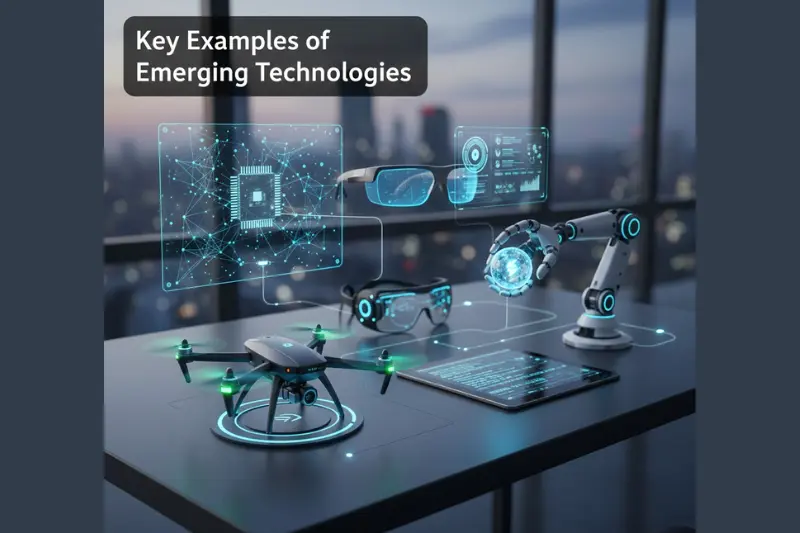
When we talk about emerging and disruptive technology, it helps to look at some real examples that are actively shaping our world. These innovations aren’t just futuristic ideas they’re being tested, implemented, and adopted across industries right now.
Artificial Intelligence (AI)
AI has moved far beyond simple chatbots. Today, it’s powering predictive analytics in healthcare, automating repetitive tasks in business, and even creating personalized learning experiences in education. Companies leveraging AI can analyze vast amounts of data quickly, making smarter decisions faster.
Example: AI algorithms are now helping doctors detect early signs of diseases like cancer, allowing for interventions that save lives.
Internet of Things (IoT)
IoT connects everyday devices to the internet, allowing them to collect and share data. This technology is transforming homes, cities, and industries by creating smart, interconnected environments.
Example: Smart thermostats that adjust heating based on your routine, or sensors in factories that monitor equipment to prevent breakdowns, are small but powerful ways IoT improves efficiency.
Blockchain
Originally known as the foundation of cryptocurrencies, blockchain offers secure, transparent, and decentralized data management. Its applications span finance, supply chain management, healthcare, and beyond.
Example: Farmers can track the journey of their produce from farm to store, ensuring authenticity and fair trade practices.
Quantum Computing
Quantum computing is still emerging, but it promises to revolutionize problem-solving in areas like cryptography, materials science, and complex simulations. While mainstream adoption is a few years away, companies and governments are investing heavily.
Example: Quantum computers could one day optimize supply chains globally in ways classical computers simply cannot.
Renewable Energy Technologies
Emerging tech in solar, wind, and battery storage is transforming how we produce and store energy. These innovations are making sustainable energy more efficient, affordable, and accessible.
Example: Solar microgrids allow remote villages to access electricity without relying on traditional infrastructure.
Augmented Reality (AR) and Virtual Reality (VR)
AR and VR are no longer just for gaming. They’re being used in education, training, remote collaboration, and retail, creating immersive experiences that improve learning and decision-making.
Example: Surgeons can practice complex operations in VR before performing them on patients, reducing errors and improving outcomes.
Biotechnology (Biotech)
Biotech innovations, including gene editing and personalized medicine, are rapidly changing healthcare and agriculture. These technologies aim to solve problems that were once considered insurmountable.
Example: CRISPR gene-editing tools are helping scientists target genetic disorders more precisely than ever before.
Disruptive Technologies That Changed Industries
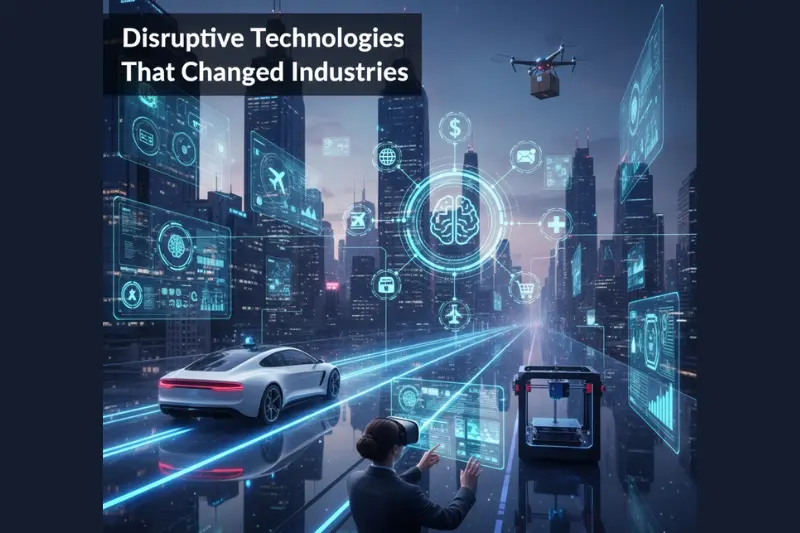
While emerging and disruptive technology gives us a peek into the future, some innovations have already fundamentally changed the way we live, work, and interact. These technologies didn’t just improve existing solutions they completely rewrote the rules of the game.
Smartphones
Smartphones are the quintessential disruptive technology. They transformed not only communication but also entertainment, commerce, navigation, and even healthcare. Apps turned phones into personal assistants, wallets, and portable offices, making traditional devices like landlines and standalone GPS units almost obsolete.
Example: Mobile banking apps have allowed millions worldwide to manage finances without ever visiting a bank branch.
Ride-Sharing Apps
Platforms like Uber and Lyft disrupted the taxi industry by introducing convenience, transparency, and dynamic pricing. Traditional taxi services suddenly had to compete with app-based services that offered real-time tracking, cashless payments, and rating systems.
Example: Many urban commuters now prefer ride-sharing over owning a car or hailing a taxi, reshaping city transportation patterns.
Cloud Computing
Cloud technology changed the way businesses store, process, and access data. Instead of investing in expensive physical servers, companies can now scale operations efficiently, collaborate globally, and innovate faster.
Example: Startups can launch worldwide services without massive upfront infrastructure costs, leveling the playing field against large enterprises.
E-Commerce Platforms
Online shopping disrupted traditional retail by offering convenience, broader selection, and competitive pricing. Companies like Amazon and Alibaba didn’t just sell products online; they built entire ecosystems with logistics, payment systems, and personalized experiences.
Example: Small businesses can now reach global audiences without owning a physical storefront, opening opportunities that were unimaginable a few decades ago.
Streaming Services
Media consumption was forever changed by platforms like Netflix, Spotify, and YouTube. Traditional cable TV and CD sales faced steep decline as consumers embraced on-demand, personalized content.
Example: Artists and creators can now reach millions directly, bypassing traditional record labels or studios.
Impact on Businesses and Industries
The rise of emerging and disruptive technology has completely reshaped how businesses operate. Companies that embrace these innovations can gain a competitive edge, while those that ignore them risk falling behind.
Innovation as a Survival Tool
Businesses are no longer just selling products or services they’re offering experiences powered by technology. AI-driven analytics, IoT-enabled operations, and blockchain-based supply chains allow companies to innovate faster and create smarter solutions.
Example: Retailers use AI to predict customer preferences, optimize inventory, and deliver personalized recommendations. Those who adopt these tools see higher sales and improved customer loyalty.
Efficiency and Cost Reduction
Automation and cloud computing help businesses streamline processes, reduce overhead, and respond faster to market changes. Efficiency isn’t just about saving money; it’s about freeing up human talent for higher-value tasks.
Example: Manufacturing plants using IoT sensors can monitor machinery in real-time, preventing costly breakdowns and reducing downtime.
The Risk of Being Disrupted
Ignoring technological trends can be fatal. Legacy businesses that resist adopting new tools often lose market share to more agile competitors. History is full of examples think Blockbuster versus Netflix or traditional taxis versus ride-sharing apps.
Example: Companies that dismissed e-commerce in the early 2000s struggled to catch up with online giants like Amazon.
Opportunities for Growth
On the flip side, businesses that understand emerging and disruptive technology can identify new markets, create innovative products, and even redefine entire industries. The ability to anticipate and adapt is now a core competency.
May be you like it:
Future Tech Olympiad – Unlock Future Careers
Futura Tech Park – Hub of Innovation
Future Tech Skills – You Must Learn for Career Growth
Impact on Society and Daily Life
Emerging and disruptive technology isn’t just transforming businesses it’s changing the way we live, work, and interact every day. From jobs to leisure, these innovations are subtly reshaping our routines and expectations.
Jobs and the Workforce
Automation, AI, and robotics are changing the nature of work. While some traditional roles may be replaced, new opportunities are emerging in tech, data analysis, and digital services. The key is adaptability and continuous learning.
Example: A factory worker might now operate smart machinery instead of performing manual tasks, gaining new skills while improving efficiency.
Communication and Connectivity
Advancements like 5G, instant messaging, and collaboration platforms have made communication faster and more global than ever. Ideas, information, and even services can cross continents in seconds.
Example: Remote work tools like Zoom or Microsoft Teams allow teams to collaborate seamlessly, making geographic boundaries almost irrelevant.
Healthcare
AI diagnostics, wearable devices, and telemedicine are revolutionizing healthcare. People can now monitor their health, consult doctors remotely, and receive early interventions, improving outcomes and accessibility.
Example: Wearables that track heart rates or detect irregular rhythms allow doctors to intervene before a serious condition develops.
Education and Learning
Edtech platforms, AR/VR simulations, and AI tutors personalize learning, making education more accessible and effective. Students can learn at their own pace, with interactive tools enhancing engagement.
Example: Virtual labs allow science students to conduct experiments safely from home, providing hands-on experience without physical limitations.
Lifestyle and Daily Convenience
From smart homes to digital assistants, technology makes everyday life more convenient, efficient, and personalized. Tasks that once took hours can now be done in minutes, freeing up time for creativity, leisure, and connection.
Example: Smart fridges track groceries and suggest recipes, while smart thermostats adjust energy use automatically, saving money and effort.
Opportunities for Professionals and Entrepreneurs
With emerging and disruptive technology reshaping industries, there’s never been a better time for professionals and entrepreneurs to step up and seize new opportunities. These technologies are creating entirely new markets, transforming traditional roles, and opening doors for innovation-driven growth.
Skills to Develop
As automation and AI take over routine tasks, human skills that complement technology become invaluable. Data analysis, AI programming, cybersecurity, digital marketing, and problem-solving are in high demand. Soft skills like adaptability, creativity, and critical thinking are equally important.
Example: A marketing professional who learns AI-driven analytics can craft highly personalized campaigns, giving them an edge over colleagues relying solely on traditional methods.
Exploring New Markets
Disruptive technologies often give rise to entirely new industries. Think blockchain-based finance, virtual reality education platforms, or renewable energy startups. Entrepreneurs who spot gaps early can establish themselves as market leaders.
Example: Startups offering smart home installation services are thriving as IoT adoption grows a market that didn’t exist a decade ago.
Investment Opportunities
Investors are increasingly looking at emerging technologies for long-term growth. AI, biotech, quantum computing, and green energy sectors present high potential, though they require careful research and risk assessment.
Example: Early investors in companies like Tesla or cloud-based software platforms have seen exponential returns, illustrating how disruptive innovations can create massive financial opportunities.
Lifelong Learning and Adaptation
Success in this landscape requires continuous learning. Professionals who embrace new tools, understand technology trends, and adapt their strategies will thrive. Entrepreneurs who iterate quickly based on tech advancements can pivot into profitable niches before competitors catch up.
Challenges and Risks
While emerging and disruptive technology opens up incredible opportunities, it also brings real-world challenges that can’t be ignored. Understanding these risks is crucial for businesses, professionals, and society at large.
Ethical Dilemmas
AI, gene editing, and data-driven tools raise ethical questions about what should and shouldn’t be done. For example, algorithms can make decisions about hiring, loans, or healthcare but how do we ensure they’re fair, unbiased, and transparent?
Example: Facial recognition technology can improve security but also risks misidentification and privacy violations. Companies must balance innovation with ethical responsibility.
Privacy Concerns
As devices and applications collect more data, personal privacy becomes harder to protect. IoT devices, mobile apps, and digital platforms can unintentionally expose sensitive information if not managed carefully.
Example: Fitness apps that track location and health metrics must handle this data responsibly, or users’ trust can quickly erode.
Cybersecurity Risks
More connectivity means more exposure to cyberattacks. From ransomware targeting hospitals to hacking smart home devices, security vulnerabilities can have serious consequences.
Example: A breach in a cloud storage system can compromise both business and personal data, highlighting the importance of robust cybersecurity measures.
Job Displacement
Automation and AI may replace certain roles, especially those involving repetitive tasks. While new jobs are created, reskilling becomes essential to avoid long-term unemployment or workforce gaps.
Example: Manufacturing workers may need training in robotics maintenance or data monitoring to stay relevant.
Regulatory Hurdles
Technology often evolves faster than regulations can keep up. Governments face challenges in creating rules that protect society without stifling innovation. Companies must navigate complex compliance landscapes, which vary by country and industry.
Example: Autonomous vehicles require local and national regulations for safe deployment, delaying mass adoption despite technological readiness.
Future Trends and Predictions
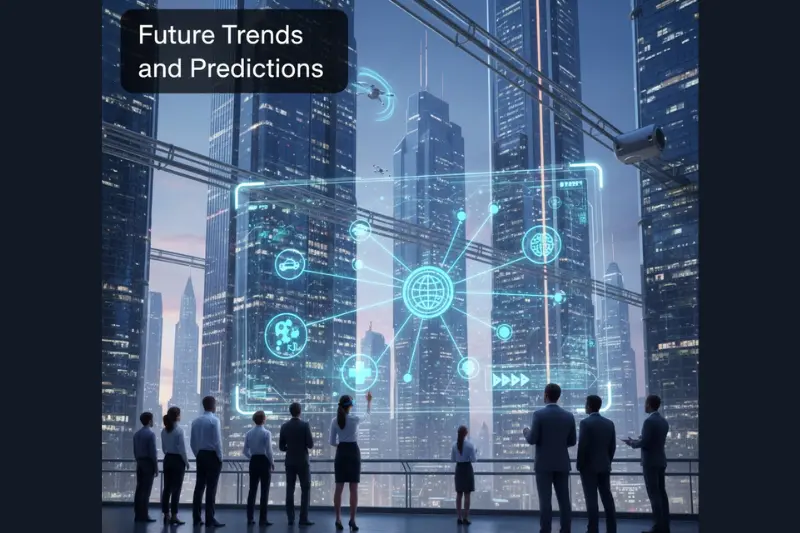
The landscape of emerging and disruptive technology is moving faster than ever, and the next decade promises innovations that could redefine entire industries. While it’s impossible to predict every breakthrough, current trends offer a glimpse into what’s coming.
AI Everywhere
Artificial intelligence will become increasingly embedded in daily life and business operations. Expect smarter personal assistants, predictive healthcare, AI-driven education, and more autonomous systems. The key will be blending AI with human decision-making to enhance outcomes rather than replace people entirely.
Example: AI could soon anticipate traffic patterns and suggest personalized commuting routes in real time, saving hours for millions of urban commuters.
Quantum Computing Breakthroughs
Quantum computing, once largely theoretical, is approaching practical applications. This technology could revolutionize fields like cryptography, logistics, pharmaceuticals, and climate modeling, solving problems traditional computers can’t handle efficiently.
Example: Drug discovery could accelerate dramatically as quantum computers simulate complex molecular interactions in minutes rather than years.
Expansion of IoT and Smart Cities
IoT is expected to drive the growth of connected infrastructure. Smart cities will optimize traffic, energy usage, waste management, and public safety, improving efficiency and sustainability.
Example: Imagine cities where streetlights adjust automatically to pedestrian activity or sensors detect water leaks before they cause damage.
Sustainable and Renewable Tech
Clean energy innovations, like advanced solar panels, energy storage, and green hydrogen, will play a huge role in combating climate change. Industries adopting these technologies early could gain both economic and environmental advantages.
Example: Entire regions could become self-sufficient in energy, reducing reliance on fossil fuels and lowering carbon footprints.
Immersive AR/VR Experiences
Augmented and virtual reality will expand beyond gaming and training into social interaction, commerce, and healthcare. Expect immersive shopping, virtual travel, and collaborative remote work experiences that feel almost real.
Example: Patients may undergo physical therapy guided by VR simulations that adapt to their progress, making rehabilitation more engaging and effective.
Biotech and Personalized Medicine
Advances in genomics, CRISPR, and biotechnology will continue to revolutionize healthcare, offering personalized treatments and preventive care tailored to individual genetic profiles.
Example: One day, cancer treatments could be designed uniquely for each patient’s genetic makeup, maximizing effectiveness while minimizing side effects.
FAQs About Emerging and Disruptive Technology
What is the difference between emerging and disruptive technology?
Emerging technologies are new innovations with potential to grow, while disruptive technologies actively transform industries, replacing traditional methods and changing market dynamics.
How do emerging technologies impact jobs?
Some roles may be automated, but new jobs are created in tech, data, and digital services. Adapting skills and continuous learning are essential to stay relevant.
Can small businesses benefit from disruptive technology?
Absolutely. Small businesses can leverage cloud computing, AI tools, and e-commerce platforms to compete with larger companies and reach global markets.
What are the risks of adopting disruptive technologies?
Risks include cybersecurity threats, ethical dilemmas, privacy concerns, regulatory challenges, and potential job displacement if not managed carefully.
How can professionals prepare for technological disruption?
Develop skills in AI, data analysis, cybersecurity, digital marketing, and critical thinking. Staying informed about trends and being adaptable is key.
Conclusion: Preparing for a Tech-Driven Future
The era of emerging and disruptive technology isn’t just approaching it’s already here. From AI and blockchain to IoT and biotech, these innovations are transforming industries, redefining jobs, and reshaping our daily lives. The question isn’t whether change will happen, but how prepared you are to navigate it.
Adaptability is key. Professionals and businesses that embrace learning, experiment with new tools, and stay curious will thrive. Continuous skill development ensures that automation and disruption become opportunities rather than threats.
Equally important is responsibility. Leveraging technology ethically, respecting privacy, and considering societal impact ensures that innovation benefits everyone, not just a few.
May be you like it:
Advantages of E-Learning – Key Benefits of Online Education
E-Learning Quran – Learn Quran Online
Scope of Digital Marketing – Career & Business Opportunities
Digital Marketing Executive – Roles, Skills & Career Guide
