

Introduction
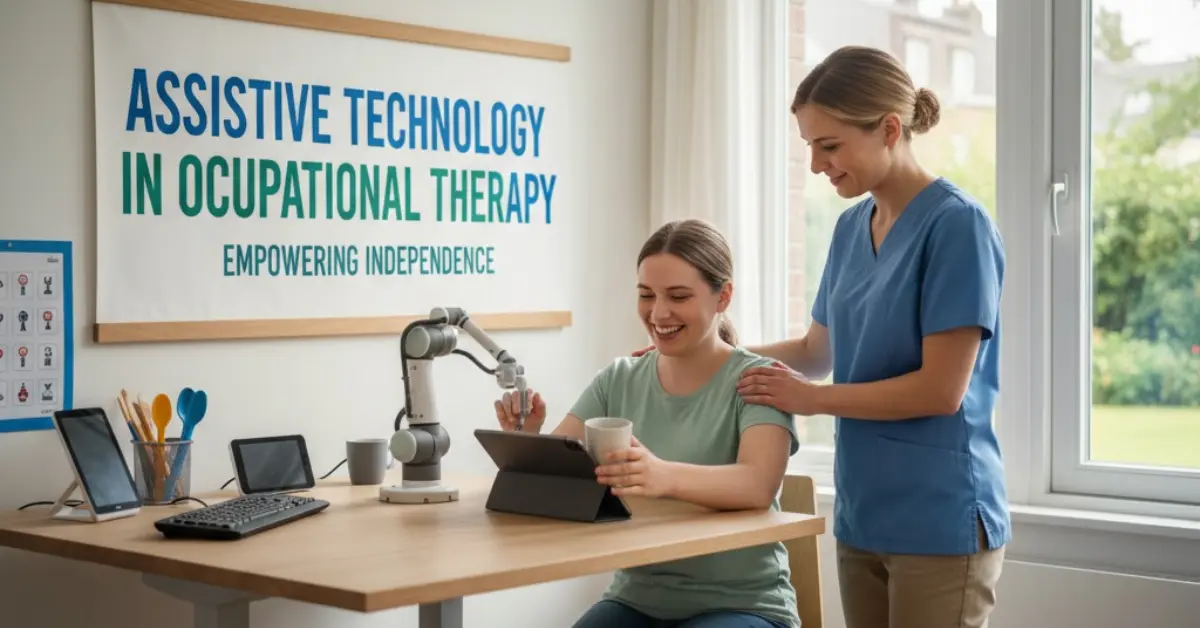
Losing the ability to do something as simple as writing your name, brushing your hair, or cooking a meal can completely change how you see yourself. For many people living with physical or cognitive challenges, those everyday actions become hurdles that chip away at independence and confidence. That’s where assistive technology in occupational therapy steps in – not as a luxury, but as a lifeline.
From adaptive utensils that make eating easier to voice-controlled systems that let someone manage their home with a single command, assistive technology is redefining what independence looks like. It’s no longer about relying on others for every task – it’s about giving people the tools and skills to do things their way, at their pace.
What’s remarkable is how this blend of innovation and compassion bridges the gap between limitation and possibility. Occupational therapists don’t just introduce gadgets; they introduce freedom – the kind that comes when someone can once again turn a doorknob, type a message, or dress without help.
In a world where technology often feels impersonal, assistive tools in occupational therapy do the opposite – they bring humanity back into healing. They remind us that true progress isn’t about creating smarter devices, but about helping people live fuller, more independent lives.
Table of Contents
What Is Assistive Technology in Occupational Therapy?
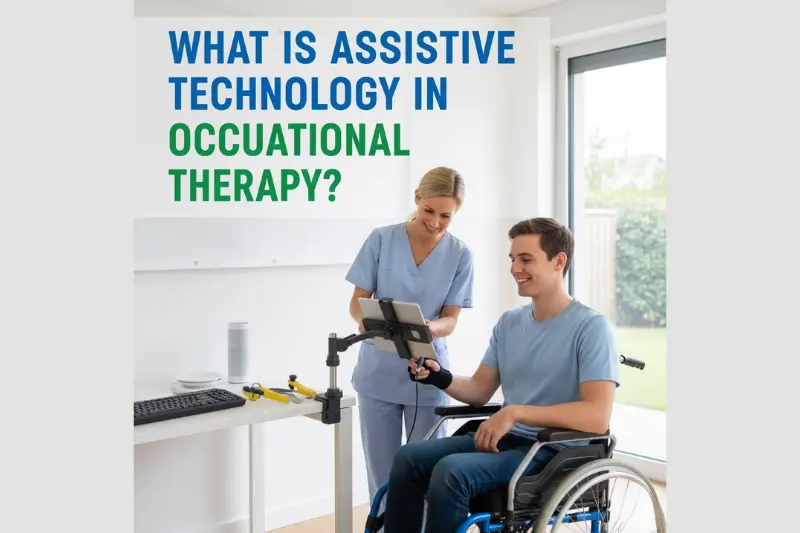
At its simplest, assistive technology in occupational therapy means any tool, device, or system that helps a person do something they’d otherwise struggle to do on their own. But in practice, it’s far more than equipment – it’s a personalized bridge to independence.
Occupational therapy focuses on helping people regain or develop the skills they need for daily living: dressing, cooking, working, communicating, moving, and more. Assistive technology becomes a key part of that mission, adapting the environment or the task itself so the person can participate fully.
Think about it this way: a special keyboard that allows someone with limited hand movement to type, a spoon designed with a flexible handle for someone with tremors, or a voice-activated system that lets a person control lights and appliances. These tools don’t “fix” a disability – they remove barriers so ability can shine through.
What makes assistive technology in occupational therapy so effective is the human customization behind it. Therapists don’t hand out generic solutions. They observe how a person lives, where the challenges lie, and what truly matters to them. Then they choose – or even design – technology that fits seamlessly into that person’s life.
Whether it’s a low-tech aid like a sock puller or a high-tech communication app, the goal is the same: empower someone to do what they love, in the way that feels right for them. And that’s the beauty of assistive technology – it turns “I can’t” into “I can, again.”
May be you like it:
New Gadgets – Latest Tech You Must Check Out
New Innovations – Shaping the Future 2025
Tech Gifts for Teenagers – Smart & Trendy Ideas
The Core Goal: Promoting Functional Independence
At the heart of assistive technology in occupational therapy lies one clear purpose – helping people reclaim control over their daily lives. It’s not just about using gadgets or devices; it’s about restoring confidence, dignity, and the ability to say, “I can do this on my own.”
Occupational therapists use technology as an extension of human potential. When someone can’t tie their shoes, button a shirt, or open a jar, it’s more than an inconvenience – it’s a reminder of lost independence. Therapists step in to change that story, using adaptive tools and strategies that fit the person’s specific needs and abilities.
For example, a stroke survivor might use an electronic hand exerciser to rebuild strength and coordination, while a child with developmental delays could benefit from a sensory-friendly stylus that makes handwriting possible. These tools aren’t one-size-fits-all – they’re part of a carefully tailored plan to support real-life function.
What’s powerful is how these small successes ripple into bigger changes. When a person can cook a meal, send a message, or drive again using assistive adaptations, they regain more than a skill – they regain confidence. And that emotional boost often motivates them to keep improving, creating a cycle of growth and self-belief.
In short, the goal isn’t perfection – it’s participation. Occupational therapists and assistive technology work together to make sure people can engage with life, not sit on the sidelines of it. That’s functional independence: the freedom to do what matters most, in your own way.
Categories of Assistive Technology in Occupational Therapy
When people hear the term assistive technology in occupational therapy, they often imagine complex machines or futuristic gadgets. But in reality, assistive tools come in all shapes and levels of sophistication – from a simple grabber stick to advanced voice-controlled systems. What matters isn’t how high-tech the tool is, but how well it fits the person’s needs and lifestyle.
Let’s break down the main categories occupational therapists work with every day:
Mobility Aids
These are the tools that help people move safely and confidently through their world. Think of wheelchairs, walkers, scooters, and adjustable canes – each designed to support freedom of movement. For someone recovering from a spinal injury or stroke, the right mobility aid can mean the difference between isolation and independence.
Therapists assess everything – from posture and balance to terrain – to ensure each device offers comfort and safety without sacrificing autonomy.
Cognitive Tools
Memory lapses, attention challenges, or executive function difficulties can make everyday life stressful. That’s where cognitive aids step in. Simple smartphone reminder apps, color-coded calendars, or smartwatches that cue daily routines help users stay organized and confident.
For individuals with brain injuries or dementia, these tools provide structure – turning chaos into calm and helping them maintain control over their day.
Communication Devices
For those who struggle to speak or write, communication devices open the door to expression. From text-to-speech software to symbol-based apps like Proloquo2Go, these tools allow people to share their thoughts, needs, and emotions clearly.
Occupational therapists often collaborate with speech-language pathologists to customize systems that reflect the person’s vocabulary, interests, and comfort level – ensuring the technology feels personal, not clinical.
Environmental Control Systems
Imagine being able to turn on the lights, adjust the thermostat, or open the curtains just by using your voice or a touchpad. Environmental control systems make this possible. These technologies – often connected to smart home setups – give users autonomy over their surroundings, especially for those with limited mobility.
For many clients, that small act of control can restore a sense of normalcy and pride.
Adaptive Equipment for Self-Care
Sometimes, independence starts with the simplest routines: eating, dressing, or bathing. Adaptive self-care tools like long-handled reachers, button hooks, or utensils with ergonomic grips empower people to take care of themselves again.
Occupational therapists often modify these items to suit a person’s unique grip strength or range of motion. Each success – whether it’s tying a shoe or holding a toothbrush – becomes a moment of empowerment.
The Role of the Occupational Therapist
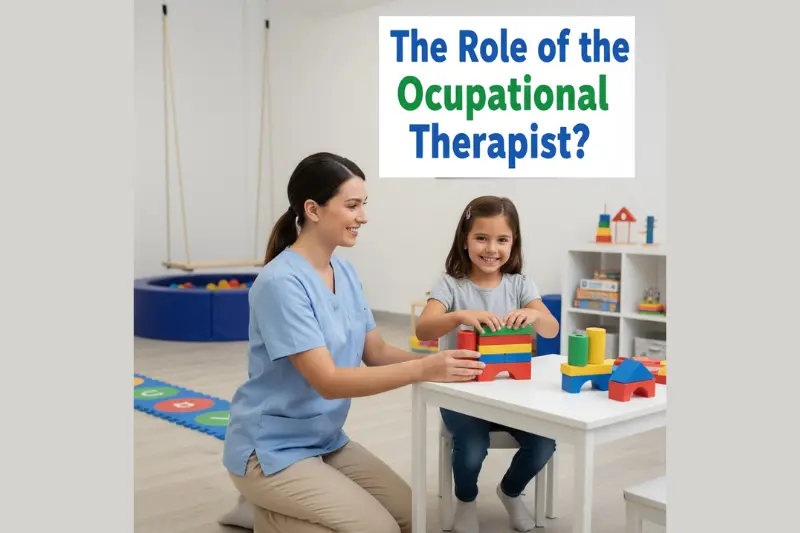
Behind every successful use of assistive technology in occupational therapy, there’s an expert guiding the process – the occupational therapist (OT). Their role goes far beyond simply handing someone a device. They’re problem-solvers, educators, motivators, and, most importantly, partners in the journey toward independence.
Occupational therapists start by getting to know the person – not just their diagnosis, but their goals, routines, and frustrations. Maybe it’s a child who wants to play with friends without feeling left out, or an older adult who just wants to cook again after a stroke. That human connection shapes everything that follows.
Assessing Individual Needs
Every journey begins with a thorough assessment. OTs evaluate physical abilities, sensory processing, cognition, and even the home or work environment. They observe how someone performs daily tasks and pinpoint where barriers exist.
This isn’t a one-size-fits-all approach – it’s a personalized discovery process that helps match the right technology to the right person.
Personalizing Devices
Once needs are identified, therapists either select or customize assistive tools to fit seamlessly into the person’s life. That could mean adjusting the height of a wheelchair, fine-tuning a communication app’s layout, or even 3D-printing a utensil handle for easier grip.
The goal? Make sure the technology enhances independence without adding complexity or frustration.
Training and Skill Building
Even the most advanced device is useless without confidence and understanding. OTs spend time training clients to use their tools safely and effectively – through hands-on practice, repetition, and encouragement.
It’s common to see an OT patiently celebrating each small victory: the first successful text message, the first step with a new walker, or the first meal eaten without assistance.
Providing Ongoing Support
Life changes – and so do people’s needs. Occupational therapists continue to check in, fine-tune equipment, and update strategies as their clients progress. This ongoing relationship ensures that assistive technology remains practical and empowering over time.
Advocates and Educators
Beyond direct therapy, OTs also educate families, caregivers, and even workplaces on how to support the person using assistive technology. They often act as advocates – helping clients navigate funding options, insurance, and access to community resources.
Real-Life Examples and Case Studies
It’s one thing to talk about assistive technology in occupational therapy in theory – but it’s in real lives, real struggles, and real victories that its impact truly shines. Each success story is a reminder that independence doesn’t always come in grand leaps; sometimes, it’s found in quiet moments of regained control.
Maria’s Story – Writing Again After a Stroke
Maria, a retired teacher, loved writing letters to her grandchildren. After a stroke left her right hand weak, she couldn’t even hold a pen. Her occupational therapist introduced her to a lightweight adaptive grip, custom 3D-printed to fit her hand’s shape and strength.
It wasn’t expensive or high-tech – but it worked. Slowly, her handwriting returned. Each letter she mailed became more than just ink on paper; it was proof that independence can be rebuilt, one small adaptation at a time.
Ethan’s Story – Finding His Voice
Ethan, a 10-year-old boy with cerebral palsy, had so much to say but couldn’t express it verbally. His therapist introduced him to a speech-generating device – a tablet with a communication app tailored to his interests. The first time Ethan used it to say, “I love you, Mom,” there wasn’t a dry eye in the room.
For Ethan, assistive technology didn’t just improve function – it gave him a voice, confidence, and a way to connect with the world on his own terms.
Aisha’s Story – Regaining Confidence After Injury
After a car accident, Aisha lost partial use of her right arm. Simple things like cooking or washing her hair became exhausting. Her occupational therapist worked with her to design a set of adaptive kitchen tools – lightweight utensils, an anti-slip cutting board, and a stabilizing brace.
With practice, Aisha could cook again – not perfectly, but proudly. “It’s not just about making dinner,” she said. “It’s about feeling like me again.”
David’s Story – Staying Independent at Home
David, an older adult living alone with early-stage Parkinson’s, struggled with tremors that made daily tasks frustrating. His OT introduced environmental control systems connected to voice commands: turning on lights, adjusting the thermostat, and playing his favorite jazz music – all hands-free.
These changes didn’t just make life easier; they kept David safe and independent, allowing him to stay in his home comfortably.
Each of these stories shares a common thread – technology made independence possible, but human connection made it meaningful. The therapists saw more than limitations; they saw potential. And that’s the real power of assistive technology in occupational therapy – when innovation meets empathy, lives change.
Benefits of Assistive Technology in Occupational Therapy
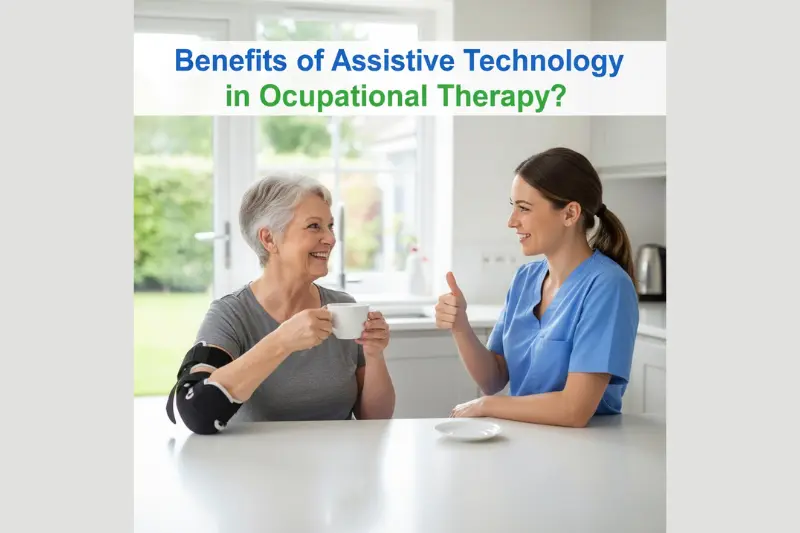
The beauty of assistive technology in occupational therapy isn’t just in the devices themselves – it’s in the freedom, confidence, and self-worth they help people rediscover. Behind every adaptive spoon, speech app, or motorized wheelchair is a deeply human goal: to live fully and independently.
Emotional Confidence and Self-Esteem
When someone regains the ability to feed themselves, write a note, or move freely, something powerful happens – confidence returns. That spark of “I can do this again” becomes emotional fuel for healing.
Occupational therapists often see this firsthand: a client who once felt dependent or frustrated begins to smile more, engage more, and see possibilities instead of limitations.
It’s not just about functionality – it’s about dignity. Technology gives people back control over their own lives, and that’s an emotional transformation no device manual can capture.
Reduced Caregiver Burden
Assistive technology can also be life-changing for caregivers. When a client can independently bathe, dress, or navigate their home, it reduces stress and burnout for the family.
Simple solutions like grab bars, voice-controlled lights, or dressing aids can mean the difference between constant supervision and shared peace of mind. It’s empowerment for both sides – the user and the caregiver.
Enhanced Physical Independence
From powered mobility aids to adaptive grips, physical independence is one of the most visible and rewarding outcomes.
Take, for example, a client who transitions from needing assistance to walking confidently with a smart walker that monitors balance and stability. The sense of freedom that comes with physical control is unmatched.
Social Participation and Inclusion
When technology breaks down physical or communication barriers, it opens doors to social connection. A speech-generating device lets someone join a conversation. A hearing-assist app allows a person to participate in meetings.
These tools create inclusion – and inclusion builds belonging. The ability to share laughter, opinions, or stories again can be as healing as any therapy session.
Long-Term Quality of Life
Ultimately, assistive technology extends far beyond therapy sessions. It shapes how people live day to day – at home, work, or school. It supports long-term participation, mental well-being, and overall life satisfaction.
In many cases, it prevents decline by keeping individuals active, engaged, and motivated to keep moving forward.
In the end, the benefits of assistive technology in occupational therapy can’t be measured only in improved mobility or function – they’re felt in confidence, connection, and control. It’s the difference between surviving and truly living.
May be you like it:
Future Tech Olympiad – Unlock Future Careers
Futura Tech Park – Hub of Innovation
Future Tech Skills – You Must Learn for Career Growth
Challenges and Barriers to Implementation
While assistive technology in occupational therapy has opened incredible doors for independence, the path to full adoption isn’t always smooth. Behind every successful outcome, there are practical – and sometimes emotional – hurdles that therapists, clients, and families must navigate together.
Cost and Affordability
Let’s start with the obvious one – cost.
High-quality devices, especially customized or digital ones, can be expensive. Not every insurance plan covers them, and out-of-pocket expenses can quickly add up. For many families, this means choosing between what’s ideal and what’s affordable.
Occupational therapists often spend hours finding funding options, grants, or community programs to make sure their clients get what they truly need – but accessibility gaps still remain.
Accessibility and Availability
Even when funding isn’t an issue, accessibility can be. Some regions don’t have easy access to assistive technology suppliers or specialists who can tailor devices properly.
For instance, a small rural clinic might not have access to advanced communication systems or 3D-printing tools for adaptive equipment. Technology may exist – but reaching it can be another story.
Lack of Awareness
Another challenge lies in simple awareness. Many people don’t realize how much assistive technology could improve their quality of life. They may associate the term with “complex medical devices” rather than small, everyday tools that make life easier – like ergonomic pens or smart home switches.
Education plays a huge role here. When occupational therapists take time to demonstrate what’s possible, clients often go from hesitant to hopeful.
Resistance to Using Technology
Change isn’t always easy, especially when it involves something unfamiliar. Some clients – especially older adults – might resist using assistive devices because they fear feeling dependent or “different.” Others worry about the learning curve of digital tools.
Therapists often take a gentle, patient-centered approach – introducing technology gradually, focusing on comfort first, and celebrating each small success. The goal isn’t to replace human ability but to support it.
Maintenance and Training
Technology also requires upkeep. Batteries need charging, software needs updates, and devices need occasional repairs. Without proper training or ongoing support, users can become frustrated and abandon tools altogether.
That’s why occupational therapists don’t just prescribe devices – they walk alongside their clients, offering hands-on training, troubleshooting help, and encouragement.
These barriers remind us that innovation alone isn’t enough – accessibility, empathy, and education are just as vital. The real magic of assistive technology in occupational therapy happens when human care meets technological progress, and both move at the pace of the person using it.
Emerging Trends and Future Innovations
The future of assistive technology in occupational therapy is already unfolding – and it’s more exciting, intelligent, and personalized than ever. With rapid advances in AI, wearable tech, and virtual reality, the tools therapists use are no longer just supportive; they’re adaptive, responsive, and deeply human-centered.
Artificial Intelligence (AI) – Smarter, More Personalized Support
AI is transforming how therapists assess and tailor interventions. Imagine a smart app that tracks a client’s hand movements during daily tasks and automatically suggests exercises to improve fine motor control.
Or predictive algorithms that identify early signs of functional decline before they become major challenges.
AI doesn’t replace therapists – it empowers them with real-time data, sharper insights, and more personalized care plans.
Virtual Reality (VR) – A Safe Space to Relearn Skills
Virtual reality has moved beyond gaming – it’s now a therapy powerhouse. VR allows clients to safely practice everyday activities like cooking, crossing the street, or driving – all in a controlled, immersive environment.
For someone recovering from a stroke or brain injury, that sense of “real-life practice without real-life risk” can make rehabilitation more engaging and less intimidating. Plus, therapists can track progress with precision and adjust challenges as confidence grows.
Wearable Technology – Real-Time Feedback, Real-Life Progress
Wearable devices – from smartwatches to motion sensors – are revolutionizing how progress is measured. They can monitor activity levels, posture, balance, or even muscle activation, feeding that data directly to therapists.
For clients, it means instant feedback: “You’re standing taller today.” For therapists, it means data-driven adjustments that keep treatment both safe and effective.
Smart Home Integration – Independence at a Voice Command
Voice-activated and IoT (Internet of Things) technologies are making homes smarter – and more accessible.
Picture someone with limited mobility being able to open curtains, adjust the thermostat, or call for help just by speaking. Occupational therapists are increasingly incorporating smart home systems into treatment plans to help clients live more comfortably and independently.
3D Printing and Custom Adaptations
3D printing has made personalization affordable. Therapists can now design and print adaptive grips, utensils, or braces perfectly fitted to each client’s needs – often right in their own clinics.
This technology bridges the gap between creativity and practicality, ensuring no one has to settle for one-size-fits-all solutions.
Technology will never replace the human element of therapy – but it will continue to expand what’s possible. The next generation of assistive technology in occupational therapy is about connection: between humans and machines, independence and inclusion, innovation and empathy.
The future looks less like science fiction and more like a world where everyone, regardless of ability, can live on their own terms.
FAQs
What is the main goal of assistive technology in occupational therapy?
To enhance independence and participation in daily activities by supporting an individual’s unique physical, cognitive, or sensory needs.
Are assistive technologies always expensive or high-tech?
Not at all. Many solutions are simple, affordable, and even DIY – it’s about finding the right fit, not the fanciest device.
Who benefits from assistive technology?
Anyone with challenges performing daily tasks – from children with developmental delays to adults recovering from injury or living with chronic illness.
How do therapists decide which technology to use?
Through personalized assessment, goal-setting, and collaboration with the client to ensure comfort, usability, and effectiveness.
What’s the future of assistive tech in OT?
Expect more integration with AI, wearable sensors, and digital platforms that personalize rehabilitation and track progress in real time.
Conclusion
At its core, assistive technology in occupational therapy isn’t about devices or data – it’s about people. It’s about giving someone the courage to take that first step alone, write their name again, or speak their thoughts out loud after years of silence. Every piece of adaptive equipment, every smart tool, every breakthrough is a bridge back to independence.
Technology may provide the tools, but therapy provides the heart. The real transformation happens in that shared space between innovation and empathy – where a therapist listens, adapts, and empowers someone to reclaim their daily life.
When you think about it, this partnership between human understanding and modern design is redefining what’s possible. A child using a communication app, a veteran walking with a robotic exoskeleton, or a senior managing daily routines through a smart home system – these aren’t futuristic fantasies anymore. They’re today’s realities.
And while the tools will keep evolving – with AI, VR, and wearable devices becoming more intuitive – the mission will stay the same: helping people live with dignity, purpose, and confidence.
In the end, assistive technology doesn’t just restore function – it restores freedom. And that’s something worth celebrating, one innovation, one success story, and one empowered life at a time.
May be you like it:
Advantages of E-Learning – Key Benefits of Online Education
E-Learning Quran – Learn Quran Online
Scope of Digital Marketing – Career & Business Opportunities
Digital Marketing Executive – Roles, Skills & Career Guide
