


Introduction
In the past, blindness often meant limited access to education, employment, and independent living. Today, however, Technology for Blind People is changing that reality. From screen readers and voice-controlled assistants to smart canes and wearable devices, innovative tools are helping blind and visually impaired individuals navigate the world with greater confidence. These technologies are not just about accessibility—they are about empowerment. They enable blind people to study, work, travel, and connect socially on an equal footing, reducing barriers and creating opportunities that were once unimaginable. As Technology for Blind People continues to advance, it is becoming a bridge to independence, inclusivity, and a more accessible future for millions of people around the world.
Why Technology is Essential for the Visually Impaired
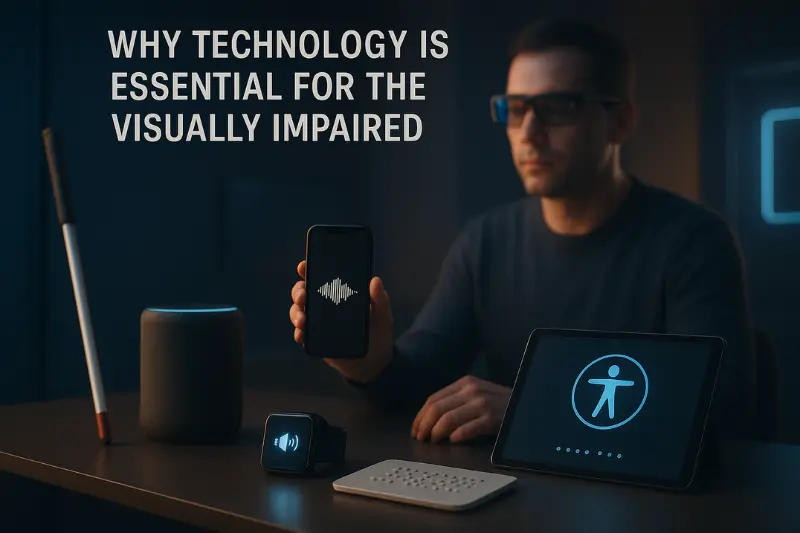
Technology is more than a convenience for people with visual impairments—it is a lifeline. It breaks down barriers that once restricted independence, education, and participation in society.
Key reasons why technology is essential:
- Access to Information – Screen readers, braille displays, and audiobooks allow blind users to study, research, and enjoy reading.
- Independence in Daily Life – Smart canes, navigation apps, and voice assistants help with travel, shopping, and home management.
- Equal Opportunities – Technology makes education and employment accessible by adapting content into usable formats.
- Social Inclusion – Messaging apps, video calls, and social media with accessibility features keep blind people connected.
New Gadgets – Latest Tech You Must Check Out
New Innovations – Shaping the Future 2025
Tech Gifts for Teenagers – Smart & Trendy Ideas
Assistive Technologies for Blind People
Here are some of the most impactful assistive technologies that support blind and visually impaired individuals:
- Screen Readers – Software that converts on-screen text into speech or braille output (e.g., JAWS, NVDA, VoiceOver).
- Braille Displays – Refreshable devices that allow users to read digital content in braille.
- Voice Assistants – AI-based tools like Siri, Alexa, and Google Assistant that respond to voice commands for tasks like sending texts, setting reminders, or controlling smart devices.
- Smart Canes – Equipped with sensors to detect obstacles and provide vibration feedback for safer navigation.
- Navigation Apps – GPS-based apps that give audio directions, such as BlindSquare and Google Maps Voice.
- Wearable Devices – Smart glasses and haptic feedback wearables that describe surroundings, read text aloud, or recognize faces.
- Optical Character Recognition (OCR) Tools – Apps like Seeing AI that scan printed text and convert it into speech instantly.
- Accessible Computers & Smartphones – Devices with built-in accessibility features (screen magnifiers, high contrast, voice control).
Popular Apps and Software for Blind People
| App/Software | Purpose | Key Features |
|---|---|---|
| JAWS (Job Access With Speech) | Screen reading software | Converts text to speech, supports braille, widely used for computers |
| NVDA (NonVisual Desktop Access) | Free screen reader for Windows | Lightweight, supports multiple languages, braille display compatible |
| VoiceOver (Apple) | Built-in iOS screen reader | Gesture-based navigation, text-to-speech, app accessibility |
| TalkBack (Android) | Built-in Android screen reader | Spoken feedback, gesture control, braille keyboard |
| Seeing AI | Object and text recognition | Reads documents, identifies people, describes surroundings |
| Be My Eyes | Remote sighted assistance | Connects blind users with volunteers for real-time help |
| Bookshare | Accessible digital library | Thousands of books in audio, braille, and large print |
| Aira | Professional assistance service | Connects to trained agents for navigation and task support |
| ZoomText | Screen magnifier and reader | Enlarges text, enhances contrast, provides speech support |
How Technology is Improving Education for the Visually Impaired
Education has become far more inclusive for blind and visually impaired students thanks to modern technology. Where once textbooks and classrooms posed barriers, now digital tools, adaptive software, and accessible platforms are breaking down those obstacles. Technology ensures that learning materials are accessible in multiple formats, teachers can engage students more effectively, and learners can independently explore knowledge at their own pace.
Key ways technology is transforming education:
- Accessible Digital Content – E-books, audiobooks, and digital libraries provide equal access to study materials.
- Screen Readers & Braille Displays – Allow students to read and write independently on computers and tablets.
- Learning Apps – Specialized apps teach braille, math, and language through interactive methods.
- Virtual Classrooms – Online platforms with accessibility features enable participation in remote learning.
- Assistive Devices – Tools like OCR scanners and smart pens help in note-taking and reading printed text.
- Inclusive Assessments – Exams can now be conducted in accessible digital formats, reducing dependency on scribes.
Employment Opportunities Enabled by Assistive Tech
| Job Sector | How Assistive Tech Helps | Examples of Tools/Software |
|---|---|---|
| Office & Administration | Screen readers and magnifiers allow access to emails, documents, and spreadsheets | JAWS, NVDA, ZoomText |
| Education & Training | Blind teachers/trainers can prepare lessons, read digital materials, and teach online | Braille displays, VoiceOver, Learning apps |
| Customer Support | Voice assistants and screen readers make it possible to handle calls, respond to queries, and use CRM software | TalkBack, NVDA, Accessible CRMs |
| Freelancing & Remote Work | Digital accessibility tools enable content writing, transcription, coding, and design | OCR tools, accessible IDEs, Upwork/Fiverr accessibility features |
| Technology & Programming | Screen readers and braille displays allow coding, testing, and software development | Visual Studio with accessibility plugins, JAWS |
| Creative Industries | Audio editing, music production, and podcasting made possible with accessible tools | Audacity with screen reader support, adaptive instruments |
| Entrepreneurship | E-commerce platforms and accessible digital tools allow blind individuals to run businesses | Shopify accessibility features, payment apps with voice feedback |
Everyday Living Made Easier with Technology
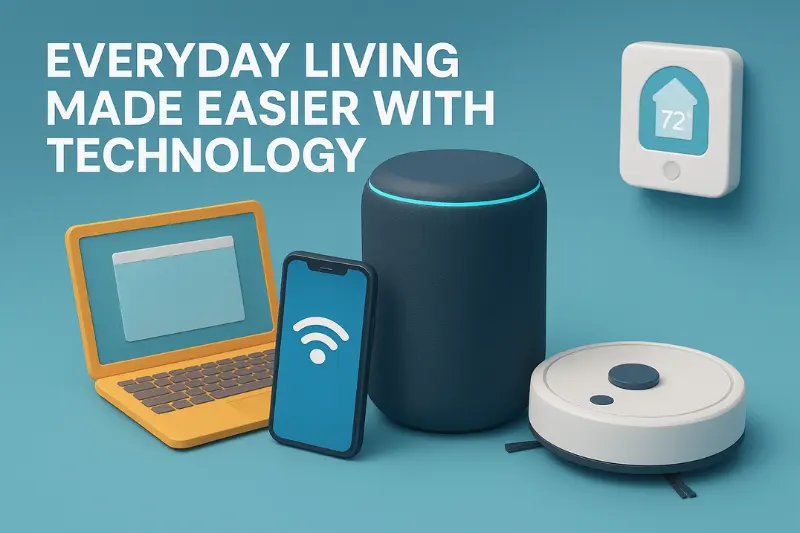
Technology has brought independence and confidence into the everyday lives of blind and visually impaired people. What once required constant assistance from others can now be managed independently with the help of smart devices, apps, and adaptive tools. From cooking meals to shopping online, technology plays a central role in making day-to-day living more comfortable and inclusive.
Examples of everyday uses of technology:
- Navigation & Travel – GPS-based apps and smart canes guide safe walking and public transport use.
- Home Management – Voice-controlled assistants help manage appliances, alarms, and lights.
- Shopping – Barcode scanning and product recognition apps assist in identifying groceries and items.
- Reading & Entertainment – Audiobooks, podcasts, and accessible e-readers provide endless leisure options.
- Money Handling – Apps with voice output help with online banking and identifying currency.
- Cooking – Talking kitchen scales, smart appliances, and recipe-reading apps make meal preparation easier.
- Health & Fitness – Wearables track steps, heart rate, and even give audio workout guidance.
Future Tech Olympiad – Unlock Future Careers
Futura Tech Park – Hub of Innovation
Future Tech Skills – You Must Learn for Career Growth
Challenges in Accessing Assistive Technology
While assistive technology has opened countless opportunities for blind and visually impaired individuals, there are still major barriers to full adoption. These challenges often prevent people from enjoying the full benefits of the tools available to them.
High Cost
Many advanced devices like braille displays, smart glasses, and specialized software are priced beyond the reach of most users, making affordability one of the biggest obstacles.
Limited Availability
In developing regions, assistive technology is often hard to find, poorly distributed, or not supported by local organizations, limiting access for many who need it most.
Lack of Awareness
A large number of blind individuals and their families remain unaware of the assistive tools that could significantly improve their quality of life.
Training Barriers
Even when technology is available, a lack of proper training means that devices and software may remain unused or underutilized.
Compatibility Issues
Many websites, applications, and digital platforms are still not fully accessible, leading to frustration when assistive tools fail to work seamlessly.
Social & Cultural Stigma
In certain communities, reliance on assistive technology may be misunderstood, leading to stigma that discourages its use.
The Future of Technology for Blind People
The future of assistive technology is filled with innovation and inclusivity. Emerging tools are expected to make daily life, education, and work even more accessible. Some promising directions include:
- AI-Powered Devices – Smart glasses and apps that describe surroundings, recognize objects, and even read emotions in real-time.
- Haptic Feedback Wearables – Devices that guide users through vibrations, helping with navigation in busy or unfamiliar areas.
- Smart Homes – Voice-controlled appliances, gesture-based systems, and AI assistants giving blind individuals greater independence.
- Inclusive Education Tools – Digital platforms designed with accessibility as a standard, offering equal learning opportunities.
- Mainstream Tech Integration – Accessibility features built directly into everyday devices, reducing the gap between assistive and regular technology.
- Enhanced Mobility Solutions – Self-driving cars and AI navigation apps opening new possibilities for safe and independent travel.
Tips for Choosing the Right Tech for Blind Users
With so many assistive devices and apps available, choosing the right technology can feel overwhelming. The best approach is to focus on the individual’s needs, lifestyle, and comfort level. Here are some useful tips to guide the selection:
- Identify Personal Needs – Consider whether the tech is for education, work, mobility, or daily living.
- Check Compatibility – Make sure the device or software works well with existing tools (smartphone, computer, or screen reader).
- Ease of Use – Choose solutions that are simple to learn and operate, especially for beginners.
- Affordability – Look for cost-effective options or explore government and NGO support programs for funding.
- Portability – Compact and lightweight devices are easier to carry for daily use.
- Training & Support – Ensure training materials, tutorials, and customer support are available.
- Future-Proofing – Select technology that can be updated or adapted as newer innovations emerge.
FAQs About Technology for Blind People
What is assistive technology for blind people?
It includes tools, devices, and software that help visually impaired individuals read, navigate, work, and live independently.
Are smartphones accessible for blind users?
Yes, most modern smartphones come with built-in screen readers like VoiceOver (iOS) and TalkBack (Android).
What is the most commonly used assistive software?
Screen readers such as JAWS and NVDA are widely used for reading and navigating digital content.
Can blind people use the internet?
Absolutely. With screen readers, braille displays, and accessible websites, blind users can browse, shop, study, and work online.
Is assistive technology expensive?
Some advanced tools can be costly, but many free or affordable options exist, and organizations often provide funding or subsidies.
Conclusion
Technology has already transformed the lives of blind and visually impaired people, turning limitations into opportunities and dependence into independence. From education and employment to mobility and everyday living, assistive innovations are proving that accessibility is not just a feature—it is a fundamental right. However, the journey is far from complete. Affordability, awareness, and inclusivity must remain at the heart of future advancements to ensure no one is left behind. By continuing to design with accessibility in mind, supporting inclusive policies, and raising awareness, we can build a world where technology empowers everyone equally. An inclusive and accessible future is not only possible—it is essential.
Advantages of E-Learning – Key Benefits of Online Education
E-Learning Quran – Learn Quran Online
Scope of Digital Marketing – Career & Business Opportunities
Digital Marketing Executive – Roles, Skills & Career Guide
