

Introduction
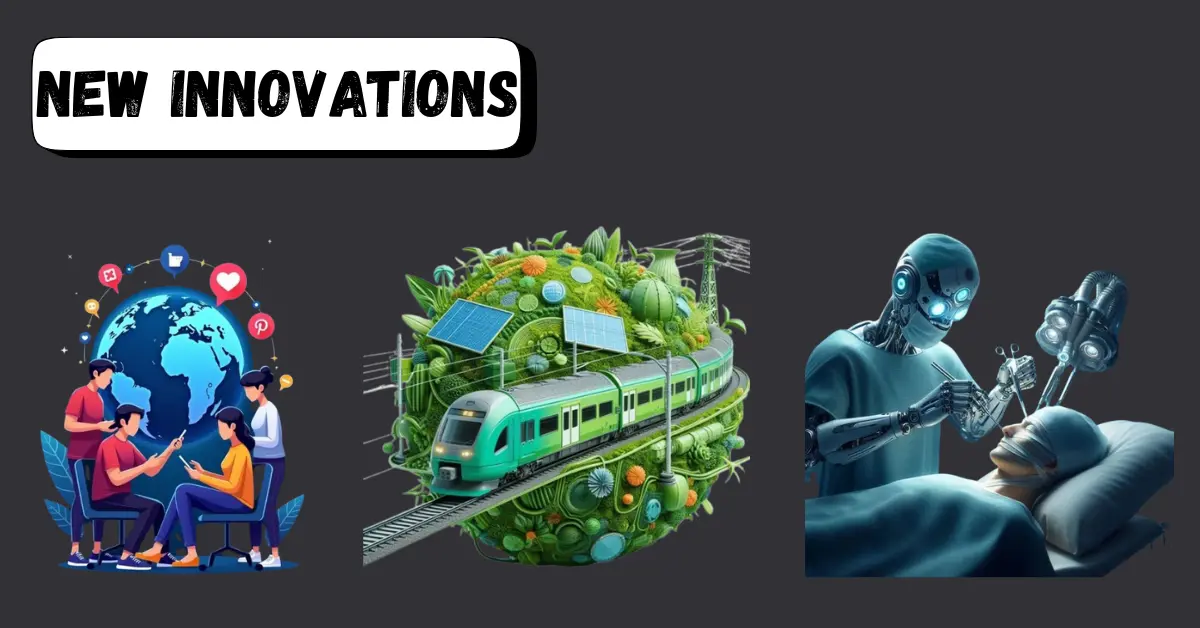
Innovation is the heartbeat of progress. Every new idea, gadget, or breakthrough we see today is shaping the way people live, work, and connect. From smarter homes to AI-driven tools, innovations are no longer distant concepts—they’re actively redefining industries and daily life in 2025. The real power of innovation lies in its ability to solve problems, create efficiency, and open opportunities that didn’t exist before.
What makes innovations matter most is their impact on people. They’re not just about technology; they’re about making life simpler, healthier, and more sustainable. Whether it’s reducing energy waste, improving healthcare access, or enabling global collaboration, new innovations ensure that societies don’t just keep up with change—they drive it.
Why Innovations Are Crucial Today:
- Solve Real Problems – From climate change to healthcare, innovations provide practical solutions.
- Improve Quality of Life – They enhance comfort, security, and accessibility.
- Empower the Future – Innovations give individuals and businesses the tools to stay competitive in a fast-changing world.
What Are New Innovations?
New innovations are breakthroughs that introduce fresh ideas, methods, or technologies to improve how people live and work. Unlike routine upgrades, true innovations bring a transformational shift—they solve problems in smarter ways, open new possibilities, and reshape industries. In 2025, innovations are strongly driven by AI, sustainability, healthcare advancements, and digital connectivity, making them more impactful than ever before.
At their core, innovations are about changing the status quo. They turn imagination into reality—whether it’s a wearable that predicts health issues, a renewable energy device reducing carbon emissions, or a digital tool that makes global collaboration seamless.
Key Characteristics of New Innovations
- Novelty – They introduce something new, not just improvements.
- Problem-Solving – Innovations directly address challenges in society, business, or daily life.
- Scalability – They can be adopted widely, not just in niche areas.
- Impact – They create meaningful changes, not just incremental updates.
Types of New Innovations in 2025
- Technological Innovations – AI tools, robotics, and 6G communication.
- Healthcare Innovations – Smart wearables, telemedicine, and biotech breakthroughs.
- Sustainability Innovations – Renewable energy gadgets, eco-friendly packaging, and green transport.
- Social Innovations – Digital education platforms, inclusive design, and collaborative apps.
- Business Innovations – Automation, cloud solutions, and blockchain-based systems.
Technology for Blind People – Education to Daily Life
Tech News Top App – Stay Updated with Latest Tech Trends
Future Tech Solutions – Shaping the Digital Era
Key Areas of New Innovations in 2025
Artificial Intelligence and Machine Learning
Artificial Intelligence (AI) and Machine Learning (ML) are at the center of almost every innovation in 2025. From personalized recommendations on your smartphone to autonomous vehicles, AI is transforming industries. Businesses rely on AI to automate workflows, predict consumer behavior, and improve decision-making, while individuals benefit from smarter personal assistants that anticipate needs rather than just respond.
One of the biggest shifts is the rise of ethical AI. Developers are focusing on transparency, bias reduction, and responsible use. AI is not just about speed and automation—it’s about making technology more trustworthy, reliable, and human-friendly.
Examples of AI/ML in 2025:
- Virtual doctors powered by AI providing instant health consultations.
- AI-powered cybersecurity tools that detect threats in real time.
- Smart assistants that schedule tasks, manage finances, and even suggest wellness tips.
Healthcare and Biotechnology
Healthcare in 2025 has moved beyond treatment to prevention and prediction. Biotechnology innovations are enabling doctors to diagnose diseases earlier, customize treatments, and even repair genetic disorders. Wearables now function like mini health labs, providing real-time updates on blood oxygen, hydration, and heart health.
Biotechnology is also unlocking cures and therapies that were once thought impossible. Gene editing, regenerative medicine, and advanced prosthetics are helping people live longer and healthier lives.
Key Healthcare Innovations:
- AI-assisted robotic surgeries with near-zero error rates.
- Gene therapy breakthroughs curing rare diseases.
- Telemedicine platforms providing global healthcare access.
Green Energy and Sustainability
As climate change becomes the most urgent global challenge, green energy innovations are reshaping industries. In 2025, solar panels are cheaper, more efficient, and widely adopted, while wind and hydro power are expanding rapidly. Smart grids powered by AI distribute energy efficiently, reducing waste and lowering costs.
Sustainability is no longer optional—it’s a core focus of innovation. From biodegradable packaging to electric vehicles (EVs) with longer ranges, eco-friendly technology is driving businesses to balance growth with responsibility.
Highlights in Sustainability:
- AI-managed smart grids reducing energy waste by up to 30%.
- Affordable solar roofs for households worldwide.
- Next-gen EVs with fast-charging and 1,000 km range.
Smart Homes and Smart Cities
Homes and cities are becoming more intelligent, connected, and efficient. Smart homes feature AI-powered assistants, automated lighting, and appliances that cut energy use. Smart cities, on the other hand, use data to improve transportation, reduce pollution, and enhance security.
In 2025, the concept of a city is evolving into a digital ecosystem. Traffic lights adapt to traffic flow in real time, drones deliver packages, and waste management is automated. These innovations aim to make urban life safer, greener, and more convenient.
Examples of Smart Innovations:
- IoT-connected homes reducing utility bills automatically.
- Smart traffic systems preventing congestion and accidents.
- AI-driven surveillance ensuring safer neighborhoods.
Space and Advanced Technologies
Space exploration is no longer just the domain of NASA—it’s now a thriving field for private companies too. In 2025, reusable rockets, space tourism, and lunar research are becoming realities. Innovations in materials science and robotics are pushing boundaries, making space travel more sustainable and affordable.
At the same time, advanced technologies like quantum computing and nanotechnology are redefining what’s possible. Quantum computers are solving problems in seconds that would take traditional computers years, while nanotech is revolutionizing medicine, materials, and electronics.
Breakthroughs in Space & Advanced Tech:
- Commercial space flights for tourists.
- Quantum computing breakthroughs in drug discovery and finance.
- Lunar and Mars exploration programs led by international collaborations.
Examples of Groundbreaking New Innovations
| Innovation | Industry | Why It’s Groundbreaking |
|---|---|---|
| AI Virtual Doctors | Healthcare | Provides instant, accurate medical advice globally |
| Smart Rings | Wearable Tech | Real-time health labs on your finger |
| Quantum Computing | Technology | Solves complex problems in minutes |
| Solar Roofs | Green Energy | Affordable, sustainable power for homes |
| Space Tourism | Aerospace | Makes space accessible to civilians |
How New Innovations Are Changing Daily Life
The true value of innovation isn’t measured in labs or corporate reports—it’s measured in how it transforms daily life. In 2025, innovations are making routines faster, healthier, safer, and more enjoyable. From the moment you wake up to the time you go to bed, new technologies quietly work in the background, saving time, cutting costs, and enhancing comfort.
Here’s how innovations are reshaping everyday living:
- Smarter Morning Routines – Smart homes adjust lighting, temperature, and even your coffee maker before you step out of bed. These automations create an efficient start to the day while reducing energy waste.
- Personalized Healthcare at Home – Wearables track vital signs in real time, sending alerts for hydration, stress, or potential illnesses. Instead of waiting for symptoms to worsen, people get early warnings and preventive guidance.
- Work Made More Efficient – AI-powered tools manage schedules, automate repetitive tasks, and even suggest ideas for projects. Remote teams collaborate seamlessly with VR meeting rooms, making work faster and more creative.
- Sustainable Living – Green energy devices like solar roofs and smart appliances cut utility bills while lowering carbon footprints. Innovations in waste management and recycling also make homes more eco-friendly.
- Safer Communities – Smart cameras, AI-driven security systems, and connected city infrastructure help prevent accidents and crimes. Real-time alerts keep families informed and protected.
- Entertainment Without Limits – AR/VR headsets bring concerts, sports, and gaming into living rooms with immersive experiences that rival real life. Cloud streaming ensures instant access to music, movies, and games.
- Simpler Travel and Commuting – AI navigation apps predict traffic, while electric and autonomous vehicles make travel cleaner and stress-free. Even public transport is smarter, faster, and more reliable.
- Global Connectivity – With 6G networks, communication is seamless, no matter the distance. Whether it’s video calls with family abroad or collaborating with global teams, innovations are eliminating barriers.
Which B.Tech Course is Best for Future – Career Guide
MPA Nashik e Learning – Online Police Training Platform
SBI e Learning – Online Training & Employee Courses
Benefits of Embracing New Innovations
- Boosts Productivity and Efficiency – Innovations like AI assistants, automation tools, and smart devices reduce time spent on repetitive tasks. This allows people and businesses to focus on creative, strategic, and high-value activities instead of routine work.
- Improves Health and Well-Being – Wearable tech, biotech breakthroughs, and telemedicine platforms make healthcare proactive rather than reactive. Individuals can monitor their health in real time and prevent issues before they escalate.
- Saves Costs in the Long Run – While adopting new technology may seem expensive at first, smart gadgets, green energy systems, and AI solutions cut utility bills, reduce medical expenses, and lower operational costs over time.
- Enhances Convenience and Comfort – Smart homes, connected appliances, and personalized apps simplify daily life. From adjusting lighting automatically to reminding you of tasks, innovations make routines seamless and stress-free.
- Strengthens Security and Safety – AI-driven surveillance, smart locks, and cybersecurity tools help protect both physical spaces and digital identities. This provides peace of mind in an increasingly connected world.
- Drives Sustainability and Eco-Friendliness – Green energy innovations, sustainable materials, and eco-conscious tech reduce carbon footprints. Embracing these ensures not only personal savings but also a healthier planet.
- Encourages Lifelong Learning and Adaptability – Staying engaged with new innovations fosters a growth mindset. People learn to adapt quickly, remain competitive, and thrive in evolving industries.
Challenges and Limitations of New Innovations
| Innovation Area | Opportunities | Challenges & Limitations |
|---|---|---|
| Artificial Intelligence (AI) | Automates tasks, improves decision-making, personalizes experiences | Risk of job loss, data privacy issues, ethical concerns about AI bias |
| Healthcare & Biotechnology | Early disease detection, personalized treatments, extended life expectancy | High costs, privacy of medical data, moral debates on gene editing |
| Green Energy & Sustainability | Reduces carbon footprint, lowers long-term costs, eco-friendly living | Expensive initial setup, rare mineral use, recycling challenges |
| Smart Homes & Cities | Greater convenience, efficiency, and safety | Cybersecurity risks, over-reliance on tech, limited access in rural areas |
| Space & Advanced Tech | Expands human exploration, drives global collaboration, boosts innovation | Extremely costly, environmental impact of launches, uncertain long-term viability |
The Future of Innovations: What Lies Ahead
Innovation is moving faster than ever before, and the coming years will redefine how we live, work, and interact with the world. From artificial intelligence shaping smarter decision-making to space exploration expanding human boundaries, the pace of change shows no signs of slowing down. The future of innovations lies not only in creating advanced tools but also in solving global challenges such as sustainability, healthcare access, and digital inclusion.
As we look ahead, one thing is clear: the innovations of tomorrow will not only focus on making life more convenient but also on building a more sustainable, ethical, and interconnected future. Businesses, governments, and individuals must prepare to adapt quickly and embrace these transformations.
Key Future Directions in Innovation
- Smarter Integration of AI & Robotics – Artificial intelligence will become more collaborative with humans, enhancing productivity rather than replacing jobs entirely.
- Personalized Healthcare – Biotechnology and AI will work together to create treatments designed for individuals, extending life expectancy and improving quality of life.
- Sustainable Technologies – Future innovations will emphasize eco-friendly energy sources, recyclable materials, and carbon-neutral systems.
- Interconnected Smart Cities – Urban planning will revolve around smart infrastructure, autonomous transport, and energy-efficient living.
- Space as the Next Frontier – Space technologies will push boundaries with commercial space travel, asteroid mining, and deeper planetary exploration.
Why Staying Updated with New Innovations Is Important
In today’s fast-changing world, innovations are no longer optional—they’re essential for growth, success, and survival. Whether you’re a student, professional, entrepreneur, or just a curious individual, staying updated with new technologies helps you remain relevant and competitive. Those who embrace change early often gain a strong advantage, while those who resist risk being left behind.
Beyond professional growth, innovations also impact daily life by making routines simpler, healthier, and more efficient. From digital payments to health trackers and renewable energy systems, innovations are shaping every aspect of society. By keeping pace, individuals and businesses can not only enjoy convenience but also contribute to solving global challenges.
Key Reasons to Stay Updated
| Benefit Area | Why It Matters |
|---|---|
| Career Growth | Learning about new technologies keeps your skills relevant and opens up new job opportunities. |
| Business Competitiveness | Companies that adapt quickly to innovations stay ahead of rivals and attract more customers. |
| Personal Convenience | Smart gadgets, apps, and services simplify daily tasks and improve lifestyle quality. |
| Health & Well-being | Innovations in fitness, biotech, and healthcare improve quality of life and early disease detection. |
| Global Awareness | Understanding new trends helps individuals make informed decisions about the future. |
| Sustainability | Embracing eco-friendly innovations contributes to solving climate challenges and building a greener future. |
FAQs About New Innovations
What are new innovations?
New innovations are fresh ideas, technologies, or methods designed to improve existing systems or solve problems in smarter, faster, and more efficient ways.
Why are innovations in 2025 different from before?
Innovations today combine AI, biotechnology, sustainability, and connectivity, making them more integrated into daily life and impactful on a global scale.
How do innovations affect daily life?
From smart homes to health apps, innovations save time, improve convenience, and enhance productivity while also offering personalized solutions.
Are new innovations expensive?
Many innovations start with high costs, but prices usually decrease as technology scales and becomes more widely available.
Do innovations create job losses?
Some jobs are replaced by automation, but new roles are also created in emerging industries, requiring people to reskill and adapt.
How can individuals stay updated with innovations?
By following tech news apps, blogs, industry reports, and attending workshops, anyone can keep track of the latest trends.
What challenges come with adopting new innovations?
Issues like privacy concerns, high initial costs, and ethical debates often accompany new technologies, requiring careful consideration.
Will innovations help solve global problems?
Yes, many innovations focus on sustainability, healthcare, and connectivity, aiming to tackle challenges like climate change and unequal access to resources.
Conclusion
New innovations are not just about gadgets or fancy technologies—they represent a shift toward smarter, more sustainable, and more connected living. From AI-driven systems to breakthroughs in healthcare, green energy, and even space exploration, innovation is redefining the possibilities of human progress. The real value of these advancements lies in how they improve lives, bridge gaps, and address some of the biggest challenges of our time.
As we move forward, staying informed and adaptable will be the key to thriving in this rapidly evolving world. Those who embrace innovation with curiosity and responsibility will not only gain personal and professional advantages but also contribute to shaping a brighter, more sustainable tomorrow.
Digital Marketing Internship – Kickstart Your Career
Best Digital Marketing Agency – Grow Your Business Fast
