


Introduction
Remember when owning a flat-screen TV was the height of luxury? Back then, the idea of streaming, voice commands, or paper-thin displays sounded like something out of a sci-fi movie. Fast-forward a decade, and those “futuristic” dreams are sitting right in our living rooms.
The television has evolved from a simple screen for cable channels into an intelligent entertainment system that listens, learns, and adapts. It’s no longer just about what we watch – it’s about how we experience it.
In this deep dive into the TV technology future, we’ll explore how smarter AI, ultra-sharp visuals, immersive sound, and personalized designs are transforming the way we connect with our screens – and what the next generation of entertainment really looks like.
Table of Contents
The Smart Evolution of TV Technology
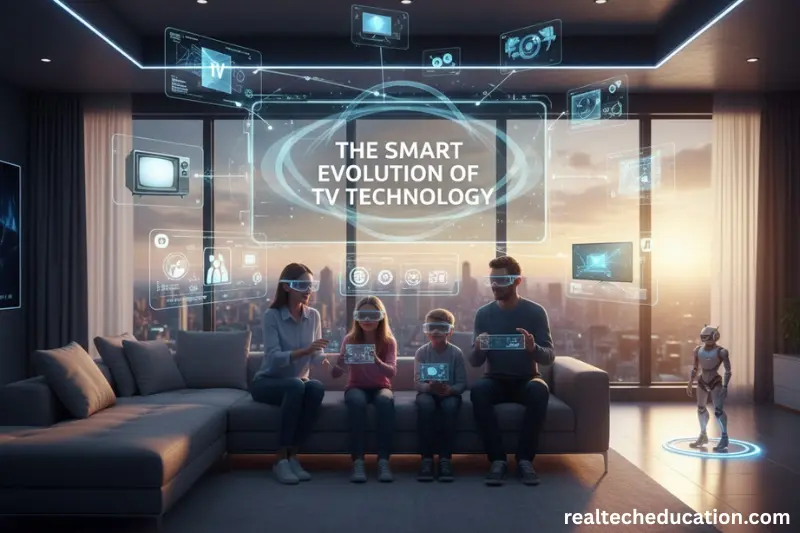
It’s wild to think how far TVs have come – from chunky boxes with antennas to sleek, intelligent systems that practically run your home. The TV technology future isn’t just about stunning visuals anymore; it’s about creating a connected experience that understands you.
Modern smart TVs are quickly becoming the heart of smart homes. They don’t just stream your favorite shows – they control lights, sync with security cameras, manage thermostats, and even respond to your voice. Whether it’s an Amazon Fire TV, Google TV, or Samsung SmartThings setup, your TV now acts like a command center for everything around you.
Imagine sitting on the couch and saying, “Movie night,” and instantly your TV dims the lights, closes the curtains, and queues up something you’ll actually enjoy – because it already knows your taste. That’s where AI and IoT (Internet of Things) are blending to make entertainment feel almost human.
May be you like this:
Technology for Blind People – Education to Daily Life
Tech News Top App – Stay Updated with Latest Tech Trends
Future Tech Solutions – Shaping the Digital Era
AI and Voice Control Integration
Artificial intelligence is the brain behind this smarter experience. Instead of endless scrolling through menus, AI now predicts what you’ll want to watch – not based on random algorithms, but on you. It studies your viewing habits, the time of day, even the type of content you prefer after work versus on weekends.
Voice assistants like Alexa, Google Assistant, and Bixby are making it effortless. You can simply say, “Play something relaxing,” and your TV will pull together a mix of shows, playlists, or YouTube clips that match your mood. It feels natural, quick, and intuitive – like talking to a friend who just “gets it.”
The best part? The more you use it, the smarter it becomes. Every command, every search, every pause teaches your TV how to serve you better – making the future of entertainment not just interactive, but personalized.
Picture Quality That Feels Real
We’ve all been wowed by a new TV at some point – that moment when you think, “Wait, is that real or on screen?”
That’s the magic the TV technology future keeps chasing – not just sharper images, but visuals so lifelike they blur the line between fiction and reality.
The evolution has been fast: from HD to 4K, then 8K, and now to advanced panels like OLED and MicroLED. Each leap brought more pixels, better brightness, and richer color. But here’s the truth – clarity alone isn’t the goal anymore. The focus now is on contrast, depth, and natural light balance that mimic how our eyes actually see the world.
Think of it this way – a bright 8K picture might look stunning, but when the shadows feel real and the colors shift smoothly with the scene’s mood, that’s when you truly get lost in what you’re watching.
OLED, MicroLED, and Quantum Dot Innovations
OLED (Organic Light Emitting Diode) displays are still the gold standard for deep blacks and infinite contrast. Each pixel lights up independently, meaning darker scenes look crisp instead of grayish.
But then came MicroLED, and things got even more exciting – offering the same perfect blacks, with higher brightness and longer lifespan. It’s like OLED’s bolder, more durable cousin.
Meanwhile, Quantum Dot technology (used in QLED TVs) pushes color accuracy to a whole new level. It’s what makes a sunset look like a sunset, not just an orange blur.
And here’s where the future gets wild – transparent and foldable TVs are already making quiet debuts. Imagine a screen that rolls up into your furniture or disappears into the wall when not in use. Your living room won’t just have a TV; it’ll have a living design element that adapts to your space.
The TV technology future isn’t about adding pixels – it’s about creating presence. When your screen looks more like a window into another world, you stop “watching” and start experiencing.
Immersive Audio and 3D-Like Experiences
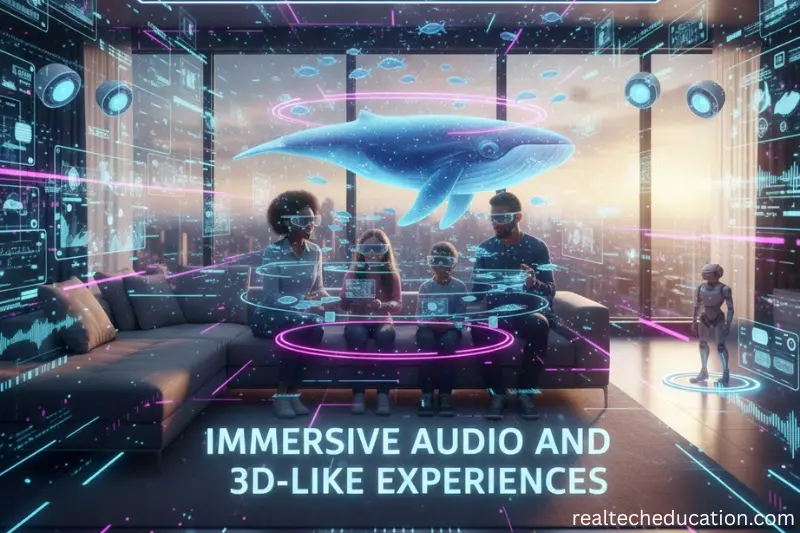
You know that moment when a movie’s sound makes you flinch – like something just whooshed past your ear? That’s not a coincidence; it’s the future of TV sound design in action.
For years, we’ve focused on making screens sharper and brighter, but the next frontier in the TV technology future is sound that moves with the story. Enter spatial audio and adaptive sound systems – two technologies that turn your living room into a mini theater.
Spatial sound uses multiple speakers (or virtual ones built into your TV) to create a 360-degree experience. Instead of sound coming from one direction, it flows around you – so if a car speeds across the screen from left to right, you’ll actually hear it move. It’s not surround sound as we knew it – it’s smarter, more dynamic, and deeply immersive.
Adaptive audio takes things a step further. Your TV can now analyze the content and environment – adjusting volume, clarity, and direction automatically. Watching an action movie? Explosions will feel deep but balanced. Late-night binge session? Dialogue becomes clearer without waking the neighbors.
When you combine that kind of sound with 3D visuals, 8K resolution, and AI-enhanced picture tuning, the line between watching and experiencing begins to disappear. It’s the difference between being an audience member and feeling like you’re right there, living every moment of the story.
The TV technology future is building a world where sound isn’t just something you hear – it’s something you feel.
May be you like this:
Which B.Tech Course is Best for Future – Career Guide
MPA Nashik e Learning – Online Police Training Platform
SBI e Learning – Online Training & Employee Courses
Sustainable and Personalized Design
As TVs get smarter and sharper, manufacturers aren’t just chasing performance anymore – they’re chasing purpose. The TV technology future is about innovation that’s both intelligent and responsible.
Big brands like Samsung, LG, and Sony are investing heavily in eco-friendly materials and modular TV designs. Instead of building new units from scratch, future TVs may allow you to swap out or upgrade parts – a little like upgrading your phone or PC. This approach reduces electronic waste and gives your TV a much longer life.
Power efficiency is another major focus. Next-gen displays like MicroLED and OLED Evo consume less energy while delivering higher brightness and better contrast. Some even include auto power-save features that adjust brightness based on ambient light or whether anyone’s actually in the room. It’s smart – and it saves you money in the long run.
But sustainability isn’t just environmental – it’s personal, too. The future of TV design is all about comfort and customization. TVs will soon adapt to your viewing habits, room lighting, and even your eye health.
Imagine a display that automatically adjusts its brightness as the sun sets, or gently reminds you to take an eye break after hours of watching. It’s technology that cares as much about your well-being as your entertainment.
In short, the TV technology future is greener, smarter, and more human – built to fit both your world and your lifestyle.
What It All Means for Viewers
So, what does all this mean for you – the person on the couch with the remote (or maybe just your voice)?
Simply put, the TV technology future is making everyday entertainment smarter, smoother, and a lot more personal.
No more aimless scrolling through endless menus. Your TV will know what you like, when you like it, and how you prefer to watch. It’ll suggest the perfect show for a lazy Sunday afternoon or a quick 20-minute laugh before bed. It’s like having a streaming assistant that actually understands you.
But the real magic is in integration – the way smart home systems, entertainment, and AI are merging into one connected experience. Your TV won’t just show content; it’ll interact with your environment. Lights dim automatically, speakers adjust sound based on the room’s acoustics, and even your smartwatch might sync to track your heart rate during an intense movie scene.
Looking ahead, the line between passive watching and active interaction will almost disappear. Future TVs will respond to gestures, emotions, and maybe even your eye movements. Want to shop for the jacket a character’s wearing? Or pause a scene by simply looking away? That’s the kind of intuitive, interactive world the TV technology future is building.
In short, entertainment is evolving from something you consume to something you connect with – and your TV is leading the way.
FAQs About the TV Technology Future
What is the future of TV technology?
The future of TV technology lies in smarter, AI-powered systems that personalize your viewing experience. Expect features like voice control, adaptive recommendations, and ultra-sharp 8K or even higher-resolution screens that blend perfectly into smart homes.
How will AI change the way we watch TV?
AI will make TVs more intuitive – learning what you like, adjusting sound and brightness automatically, and even syncing with other devices in your home. It’s all about creating a viewing experience that feels tailor-made for you.
What are OLED and MicroLED, and why do they matter?
OLED and MicroLED are next-gen display technologies offering deeper blacks, brighter highlights, and stunning color accuracy. OLED is known for its perfect contrast, while MicroLED takes it further with higher brightness and longer lifespan – ideal for large, immersive screens.
Will TVs become more eco-friendly in the future?
Yes. Leading brands are moving toward recyclable materials, energy-efficient panels, and modular designs that reduce waste. The goal is to make innovation sustainable without compromising performance or picture quality.
What will make future TVs more immersive than today’s models?
Next-gen TVs will combine ultra-realistic visuals with spatial sound, 3D depth, and interactive AI. You won’t just watch a movie – you’ll feel like you’re inside it, thanks to synchronized sound, lighting, and motion-based effects.
Conclusion
The TV technology future isn’t just about better screens – it’s about smarter experiences.
We’re entering an era where TVs think, adapt, and blend seamlessly into our lives. The visuals are sharper, the sound is more immersive, and the design feels almost alive – all working together to make watching something truly personal.
It’s incredible to see how technology has reshaped the way we watch, connect, and unwind. What used to be a simple living room activity is now an intelligent, sensory experience that keeps learning with us.
And that’s the most exciting part – our TVs are no longer just for watching stories; they’re becoming part of ours.
So, the real question is: what will your TV learn about you next?
May be you like this:
Digital Marketing Internship – Kickstart Your Career
Best Digital Marketing Agency – Grow Your Business Fast
