

Introduction to E-Learning Interactive
If you’ve ever tried an online course that felt like reading a long textbook on a screen, you know how quickly your attention can drift. That’s where E-Learning Interactive comes in. Unlike traditional online courses, which often rely solely on videos or slides, interactive e-learning actively involves learners through quizzes, simulations, polls, or gamified exercises making learning engaging, memorable, and more effective.
Why does it matter today? In a world where attention spans are shorter and information overload is real, passive learning just doesn’t cut it. Interactive elements not only keep learners focused but also help them apply concepts in real-time, improving understanding and retention. In other words, it’s learning that sticks, not just something you watch or skim through.
Table of Contents
How Interactivity Enhances Learning

One of the biggest challenges with online learning is keeping learners engaged. Passive consumption just watching videos or reading slides can quickly become boring, and the information often slips away as soon as the course ends. That’s where E-Learning Interactive makes a real difference. By involving learners in the process, it turns them from spectators into active participants.
Active participation could mean answering a quick quiz, dragging and dropping elements to complete a workflow, or even making choices in a simulation that mirrors real-life scenarios. When learners are doing, not just watching, they’re processing information on a deeper level.
Engagement directly impacts retention. Studies consistently show that learners who interact with content remember more and understand concepts better than those who passively consume information. For example, an employee who practices a virtual sales pitch in an interactive module is far more likely to replicate that skill in real life than one who simply watched a video of someone else presenting.
May be you like it:
Technology for Blind People – Education to Daily Life
Tech News Top App – Stay Updated with Latest Tech Trends
Future Tech Solutions – Shaping the Digital Era
Common Interactive Elements
When we talk about E-Learning Interactive, the magic lies in the elements that get learners involved. These features don’t just make courses more fun they actively improve understanding and retention. Let’s break down some of the most common ones and how they work in real life:
Quizzes
Quick checks after a lesson help reinforce what you just learned. Instead of passively moving on, learners get immediate feedback, which cements knowledge. For example, a marketing course might quiz you on buyer personas right after explaining them, making it easier to recall later.
Polls
Polls invite learners to reflect and respond. They’re great for gathering opinions or testing understanding in real time. Think of a leadership course asking, “Which approach would you take in this scenario?” it sparks reflection and discussion.
Gamification
Points, badges, or leaderboards turn learning into a challenge. It taps into the same motivation that makes video games addictive. For instance, a language app might reward you for completing daily lessons, keeping you coming back consistently.
Simulations
These let learners practice real-world scenarios safely. A nursing program might simulate patient care, allowing students to make decisions and see outcomes without real-life risk. Simulations are especially powerful because they combine theory with practical application.
Multimedia Integration
Videos, infographics, audio clips, and animations cater to different learning styles and keep content dynamic. For example, a history lesson might combine a short documentary clip with an interactive timeline to make events more memorable.
Benefits for Learners
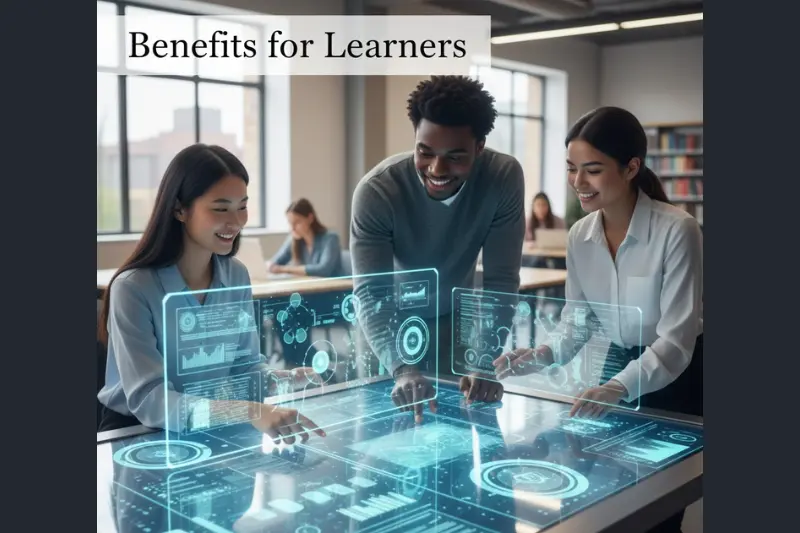
E-Learning Interactive isn’t just a trend it genuinely changes the way learners absorb and retain information. One of the biggest perks is improved retention. When you actively engage with content through quizzes, simulations, or gamified activities, your brain processes information more deeply. Instead of forgetting a concept minutes after reading it, you’re far more likely to remember and apply it later.
Interactivity also boosts motivation and confidence. Small wins like earning points, completing a challenge, or getting instant feedback create a sense of accomplishment. Learners feel encouraged to continue, which reduces the likelihood of dropping out mid-course. Ever noticed how satisfying it feels to finally “get” a concept after trying it yourself? That’s exactly the confidence interactive learning fosters.
Then there’s flexibility and accessibility. Everyone learns differently some prefer visuals, others learn best through doing. Interactive e-learning caters to multiple learning styles, allowing people to engage in ways that suit them best. Whether it’s a short drag-and-drop activity, a video, or a simulation, learners can pick what works for their pace and style, making education more inclusive and effective.
Benefits for Organizations & Educators
E-Learning Interactive isn’t just a win for learners it’s a game-changer for organizations and educators too. One of the biggest advantages is scalability. A single interactive course can reach hundreds or even thousands of employees or students without losing quality. Whether your team is spread across multiple locations or your students are remote, interactive modules ensure everyone gets the same high-quality learning experience.
It’s also incredibly cost-effective. Traditional in-person training or workshops require travel, venues, and instructors. Interactive e-learning cuts these costs while maintaining engagement. Plus, the content can be reused and updated easily, making it a long-term investment rather than a one-off expense.
Another major benefit is measurable outcomes. Interactive platforms track participation, quiz scores, and completion rates. This data lets organizations identify areas where learners struggle and refine training accordingly. For educators, it’s a powerful tool to see which concepts are sticking and which need reinforcement.
Designing Effective Interactive E-Learning
Creating a great E-Learning Interactive course isn’t just about adding flashy quizzes or videos it’s about intentional design that balances engagement with learning outcomes.
One key tip is to keep content bite-sized. Long modules can overwhelm learners, causing attention to drift. Short, focused lessons five to ten minutes each let learners absorb information without feeling drained. Think of it like snacking on knowledge instead of trying to eat an entire buffet in one sitting.
Another important element is realistic scenarios. When learners can apply concepts in situations that mimic real life, the learning sticks. For example, a project management course might present a simulated client issue and ask learners to decide the next steps. This not only reinforces theory but also builds problem-solving skills that translate directly to the workplace.
Varied activities also keep engagement high. Mixing quizzes, drag-and-drop exercises, multimedia content, and discussion prompts ensures learners don’t get bored. Variety caters to different learning styles, making the course more inclusive and effective.
Tools and Platforms for Interactive E-Learning
The right technology can make or break E-Learning Interactive experiences. Today, a wide range of software, apps, and Learning Management Systems (LMS) make creating engaging courses easier than ever.
Popular tools like Articulate 360, Adobe Captivate, and iSpring Suite allow course creators to build quizzes, simulations, and gamified modules without needing advanced coding skills. Platforms like Moodle, Canvas, and TalentLMS offer robust tracking and collaboration features, helping educators and organizations see exactly how learners are progressing. Even simpler apps, like Kahoot! or Quizlet, turn lessons into interactive games that boost engagement in minutes.
Technology enhances interactivity by making it dynamic, measurable, and flexible. Multimedia content videos, animations, and audio caters to different learning styles, while real-time quizzes or polls provide instant feedback. Some platforms even allow branching scenarios, where learners’ choices lead to different outcomes, simulating real-world decision-making.
Challenges and How to Overcome Them
Even the best E-Learning Interactive courses can run into obstacles. Understanding these challenges and knowing how to tackle them is key to creating a successful learning experience.
Technical Issues
Glitches, slow-loading content, or compatibility problems can frustrate learners quickly. The solution? Choose reliable platforms, test your modules across devices, and provide clear technical support. A quick troubleshooting guide or FAQ can save learners time and reduce frustration.
Learner Resistance
Some people are hesitant to engage with interactive features, especially if they’re used to passive learning. Combat this by explaining the benefits upfront and starting with simple, low-pressure activities. Gamification elements or small rewards for participation can also motivate learners to dive in.
Content Overload
Too much information at once can overwhelm and disengage learners. Break lessons into manageable chunks, prioritize key concepts, and integrate interactive elements gradually. Bite-sized modules with real-life scenarios make complex content easier to digest.
Strategies to Maintain Engagement
- Mix different interactive elements to keep things fresh.
- Provide immediate feedback so learners see progress.
- Encourage collaboration through discussion boards or group challenges.
- Regularly update content to keep it relevant and engaging.
Real-Life Applications & Success Stories
One of the best ways to see the power of E-Learning Interactive is through real-world examples. Across corporate training, schools, and online courses, interactive elements have transformed how people learn and retain information.
Corporate Training
A global sales team used an interactive e-learning module with scenario-based simulations and quizzes. Instead of sitting through long slide decks, employees practiced pitching to virtual clients and received instant feedback. Within weeks, managers reported improved confidence and higher success rates in real client interactions.
Schools & Universities
In a biology course, students engaged with interactive lab simulations that allowed them to experiment without the constraints of a physical lab. Not only did their test scores improve, but teachers also noticed higher participation and curiosity during discussions.
Online Courses & Skill Development
Language learning platforms that integrate gamified quizzes, speaking exercises, and immediate feedback have seen significantly higher course completion rates. Learners reported feeling more motivated and confident applying skills in real-life conversations.
Future of Interactive E-Learning
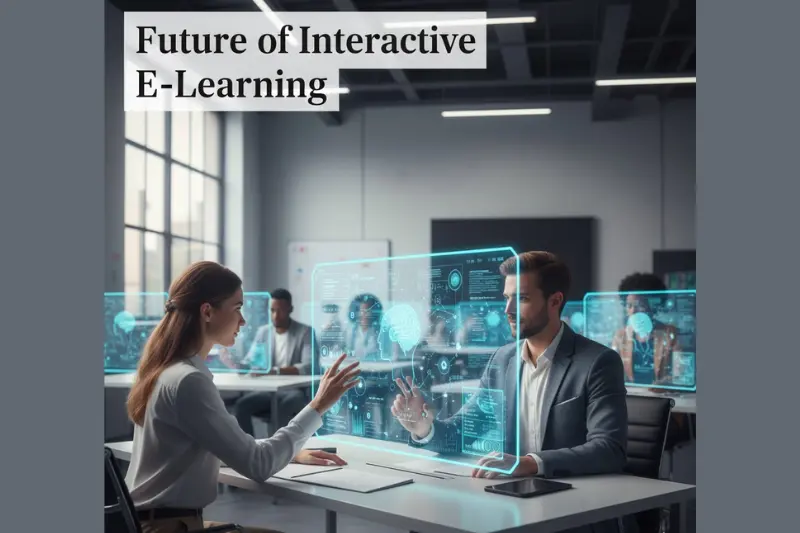
The world of E-Learning Interactive is evolving faster than ever. Emerging technologies are not just making courses more engaging they’re reshaping how we learn entirely.
AI-Powered Personalization
Artificial intelligence can now tailor learning paths to each individual. Imagine a platform that identifies the topics you struggle with and dynamically adjusts quizzes, scenarios, or content pacing to help you master them faster. This level of personalization boosts retention and keeps learners motivated.
Virtual and Augmented Reality (VR & AR)
Immersive experiences are no longer science fiction. In fields like medicine, engineering, or vocational training, VR allows learners to practice complex procedures safely, while AR can overlay interactive elements onto real-world environments. The result? Deep, experiential learning that’s far more memorable than traditional methods.
Gamification Evolution
Gamified learning continues to evolve beyond points and badges. Adaptive challenges, story-driven scenarios, and social leaderboards are creating experiences that feel like a game but with measurable educational outcomes. Learners are more engaged, motivated, and willing to push through difficult topics.
May be you like it:
Which B.Tech Course is Best for Future – Career Guide
MPA Nashik e Learning – Online Police Training Platform
SBI e Learning – Online Training & Employee Courses
FAQs – E-Learning Interactive
What is interactive e-learning?
It’s online learning that involves learners actively, using quizzes, simulations, or gamified activities.
Why is interactivity important in e-learning?
It boosts engagement, improves retention, and helps learners apply knowledge in real-life scenarios.
Can interactive e-learning work for any subject?
Yes! From corporate training to school courses, interactive elements enhance learning for almost any topic.
How do I create effective interactive courses?
Use bite-sized modules, realistic scenarios, varied activities, and provide instant feedback.
Are interactive e-learning courses expensive?
They may cost more upfront, but they’re cost-effective long-term due to scalability and better learning outcomes.
Conclusion
E-Learning Interactive isn’t just a flashy feature it’s a smarter, more effective way to learn. By turning passive consumption into active participation, it helps learners retain information, build confidence, and apply skills in real-world scenarios.
For organizations and educators, interactive learning means scalable training, measurable outcomes, and happier, more motivated learners. With emerging technologies like AI, VR, and advanced gamification, the potential for immersive, personalized learning experiences is only growing.
May be you like it:
Digital Marketing Internship – Kickstart Your Career
Best Digital Marketing Agency – Grow Your Business Fast
