


Introduction
In today’s fast-paced digital era, developing e learning has become a key strategy for modern education and corporate training. As more organizations shift toward online learning, the need for well-structured, interactive, and accessible e-learning programs continues to grow. From schools and universities to global companies, everyone is embracing digital platforms to enhance learning experiences.
Developing e learning involves designing engaging online courses, integrating multimedia elements, and using innovative tools to make education more flexible and effective. Whether for employee training or academic growth, e-learning development is shaping the future of how people learn, teach, and share knowledge in 2025 and beyond.
Table of Contents
What Is E-Learning Development?
E-learning development refers to the process of designing, creating, and delivering educational content through digital platforms. It involves combining instructional design, multimedia elements, and technology to create engaging online learning experiences.
In simple terms, developing e-learning means transforming traditional learning materials into interactive digital courses that can be accessed anytime, anywhere. These courses often include videos, quizzes, animations, simulations, and assessments to help learners understand and retain information effectively.
In today’s fast-paced digital world, e-learning development has become a cornerstone of modern education and corporate training. Schools, universities, and businesses are increasingly adopting online learning platforms to reach larger audiences, reduce training costs, and make learning more flexible.
With advancements in tools and technologies – such as Learning Management Systems (LMS), AI-based personalization, and mobile learning apps – e-learning has evolved beyond simple online courses. It now focuses on interactive, learner-centered experiences that enhance engagement and performance.
In short, developing e-learning is not just about putting lessons online – it’s about creating meaningful, accessible, and technology-driven learning experiences that meet the diverse needs of today’s learners.
May be you like this:
Technology for Blind People – Education to Daily Life
Tech News Top App – Stay Updated with Latest Tech Trends
Future Tech Solutions – Shaping the Digital Era
Why E-Learning Development Matters in 2025
In 2025, e-learning development has become more important than ever due to the rapid pace of digital transformation and the global shift toward remote, flexible, and continuous learning. As technology reshapes how we work and study, the demand for well-designed online learning solutions continues to grow across every sector – from schools and universities to corporate training and professional development.
The Impact of Digital Transformation
Digital transformation has revolutionized the way education and training are delivered. Cloud-based platforms, AI-powered tools, and data-driven learning systems have made it easier to create, distribute, and personalize educational content. Institutions and organizations can now design custom e-learning programs that adapt to individual learning styles, track progress, and improve outcomes in real time.
Growing Market and Future Potential
According to recent industry forecasts, the global e-learning market is projected to reach over $500 billion by 2030, with steady growth driven by advancements in AI, VR, and mobile technologies. This means the future of e-learning is not just about convenience – it’s about creating immersive, interactive, and accessible experiences that match real-world learning needs.
Benefits for Educational Institutions
For schools and universities, developing e-learning courses allows them to reach a global audience, offer hybrid or fully online programs, and reduce operational costs. It also supports inclusive education by providing students with flexible access to high-quality materials anytime, anywhere.
Benefits for Companies and Employees
Businesses are also investing heavily in e-learning development to train employees efficiently. Online training programs help companies upskill their workforce, improve productivity, and ensure consistent learning across teams. With on-demand access, employees can learn at their own pace – making e-learning a key component of modern talent development.
Benefits for Learners
Learners benefit the most from this evolution. E-learning offers flexibility, accessibility, and personalization – allowing individuals to learn according to their schedule, device, and preferred learning style. Whether pursuing a new skill, certification, or degree, e-learning empowers people to achieve their goals without the limits of time or place.
Key Steps in Developing an E-Learning Program
Developing an effective e-learning program requires a structured approach that balances technology, instructional design, and learner engagement. Below are the five essential steps to create impactful online learning experiences that truly deliver results.
Step 1 – Identify Learning Goals
The foundation of every successful e-learning course starts with clear and measurable learning objectives. Before creating any content, determine what you want learners to achieve by the end of the course.
Ask questions like:
- What skills or knowledge should learners gain?
- Who is the target audience?
- How will success be measured?
Defining learning goals helps guide content creation, ensures alignment with organizational needs, and makes it easier to evaluate the program’s effectiveness.
Step 2 – Choose the Right Authoring Tools
Once goals are set, the next step is to select the best e-learning authoring tools. These tools help you design, develop, and publish interactive courses. Popular options include:
- Articulate 360 – Great for professional-looking courses with quizzes and interactions.
- Adobe Captivate – Ideal for responsive design and simulations.
- iSpring Suite – Easy PowerPoint-based tool for beginners.
- Canva or Genially – Perfect for creating engaging visuals and presentations.
Choosing the right tool depends on your technical skills, budget, and course complexity.
Step 3 – Design Interactive Content
Engagement is the key to effective e-learning. Focus on creating interactive and visually appealing content that captures learner attention.
You can include:
- Videos, infographics, and animations
- Scenario-based learning
- Quizzes and gamified assessments
- Discussion forums and collaborative activities
A strong instructional design strategy ensures that learners not only consume content but actively participate in the learning process.
Step 4 – Implement and Test the Course
After designing the course, it’s time to upload it to a Learning Management System (LMS) and test how it performs.
Key tasks include:
- Checking navigation and interactivity
- Ensuring compatibility across devices and browsers
- Running pilot tests with a small group of users
Testing helps identify technical issues, usability concerns, or content gaps before a full rollout – ensuring a seamless learning experience for all participants.
Step 5 – Gather Feedback and Improve
The final step is evaluation and continuous improvement. Collect feedback from learners, instructors, and analytics reports to measure how well the course met its objectives.
Ask learners about clarity, engagement, and usability. Use this feedback to make updates and enhancements.
E-learning development is an ongoing process – regular updates keep your content relevant, engaging, and aligned with changing needs.
Essential Tools and Technologies for E-Learning Development
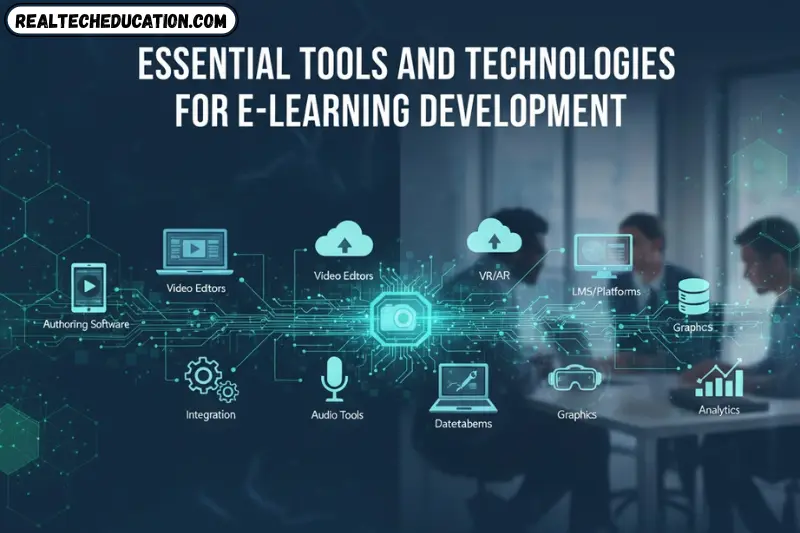
Building a successful e-learning program requires the right mix of tools and technologies to design, deliver, and manage digital learning experiences effectively. These tools help streamline development, improve learner engagement, and ensure smooth content delivery across devices. Below are some of the most essential tools and platforms used in e-learning development today.
Learning Management Systems (LMS)
A Learning Management System (LMS) is the backbone of any e-learning program. It’s a platform where courses are hosted, tracked, and managed. An LMS allows educators and trainers to assign lessons, monitor learner progress, and generate performance reports.
Popular LMS platforms include:
- Moodle: A free, open-source platform ideal for academic institutions.
- TalentLMS: Great for businesses and corporate training programs.
- Canvas LMS: Widely used in schools and universities for its user-friendly interface.
- LearnDash: A WordPress-based LMS perfect for educators creating online courses.
A good LMS not only stores and delivers content but also enhances learner engagement through discussion forums, quizzes, and progress tracking.
E-Learning Authoring Tools
Authoring tools are software applications that enable course creators to design and publish e-learning content. They help combine text, multimedia, and interactivity into a cohesive learning experience – without needing advanced coding skills.
Popular authoring tools include:
- Articulate 360: Offers powerful templates, quizzes, and media integration for professional-looking courses.
- Adobe Captivate: Best for creating simulations, responsive courses, and mobile-friendly modules.
- iSpring Suite: Integrates with PowerPoint for easy and fast course creation.
- Lectora Inspire: Known for its strong accessibility features and customization options.
Choosing the right authoring tool depends on your project goals, technical expertise, and design preferences.
AI-Based Learning Tools
Artificial Intelligence is revolutionizing e-learning development by making learning more personalized, adaptive, and data-driven. AI tools can analyze learner behavior, recommend content, and even automate assessments.
Examples of AI-based learning tools include:
- Coursera and LinkedIn Learning: Use AI to suggest personalized courses.
- Quizgecko: Generates smart quizzes using AI.
- Synthesia: Creates AI-generated training videos with virtual instructors.
- ChatGPT & AI Tutors: Provide real-time support and Q&A assistance for learners.
These intelligent tools help instructors save time while enhancing learner engagement and satisfaction.
Multimedia and Design Tools
To make e-learning more engaging, multimedia tools are used to create visuals, animations, and videos that simplify complex concepts.
Commonly used tools include:
- Canva – For creating professional graphics and infographics.
- Vyond – For animated video creation.
- Camtasia – For screen recording and video editing.
- Adobe Photoshop and Illustrator – For custom visuals and branding.
Visual and multimedia elements play a crucial role in making e-learning interactive and enjoyable.
May be you like this:
Which B.Tech Course is Best for Future – Career Guide
MPA Nashik e Learning – Online Police Training Platform
SBI e Learning – Online Training & Employee Courses
Best Practices for Creating Engaging Online Courses
Creating an online course is more than just uploading content – it’s about crafting an interactive and meaningful learning experience that keeps learners motivated from start to finish. To ensure your e-learning courses are effective and engaging, here are some of the best practices every developer should follow.
Use Multimedia Wisely
Multimedia elements such as videos, images, animations, and audio can make learning more dynamic and enjoyable. However, balance is key – too many visuals or long videos can distract learners.
- Use short, focused videos to explain key concepts.
- Incorporate infographics and interactive visuals to simplify complex ideas.
- Add background audio or narration only when it enhances comprehension, not when it overwhelms.
Smart multimedia usage helps maintain learner attention and improves retention.
Keep Lessons Concise and Focused
Attention spans are short in the digital environment. Instead of lengthy modules, divide content into bite–sized lessons or microlearning units.
- Focus on one learning objective per lesson.
- Use simple language and short paragraphs.
- Add quick quizzes or knowledge checks after each section.
Concise lessons make it easier for learners to grasp key concepts and stay motivated throughout the course.
Ensure Accessibility for All Learners
An effective e-learning course must be inclusive and accessible to everyone, including learners with disabilities.
Follow accessibility standards such as WCAG (Web Content Accessibility Guidelines) to ensure all users can access your content.
- Add captions and transcripts for videos.
- Use alt text for images.
- Choose readable fonts and high-contrast colors.
By prioritizing accessibility, you make your course available to a wider audience and demonstrate commitment to equal learning opportunities.
Encourage Interaction and Participation
Interactive elements keep learners actively engaged rather than passively reading or watching.
- Include quizzes, drag-and-drop exercises, simulations, or real-world scenarios.
- Add discussion boards or live Q&A sessions to promote collaboration.
- Use gamification techniques like points, badges, and leaderboards for motivation.
The more interactive your course, the more likely learners will stay involved and complete it.
Test Usability and Gather Feedback
Before launching your course, conduct usability testing to ensure everything runs smoothly.
- Test navigation, load times, and mobile responsiveness.
- Ask beta testers for feedback on clarity and design.
- Continuously monitor learner analytics to identify areas for improvement.
Regular testing and updates ensure your e-learning program stays user-friendly and relevant.
Common Challenges in E-Learning Development (and How to Overcome Them)
While e-learning offers flexibility and innovation, developing effective online courses isn’t without challenges. From technical limitations to learner engagement issues and content maintenance, e-learning developers often face several obstacles that can impact the success of their programs. Understanding these challenges-and knowing how to overcome them-is essential for creating smooth and effective learning experiences.
Technical Barriers
One of the biggest challenges in e-learning development is dealing with technical issues such as software compatibility, internet connectivity, and platform performance. Learners may face difficulties accessing courses on different devices or browsers, leading to frustration and dropout.
How to overcome it:
- Choose reliable, mobile-responsive LMS platforms and tools.
- Test courses thoroughly on multiple devices and operating systems.
- Provide offline access options or downloadable materials for low-bandwidth users.
- Offer clear technical support and troubleshooting guides.
Ensuring a smooth, accessible, and user-friendly experience helps eliminate most technical barriers.
Low Learner Engagement
Keeping learners motivated in an online environment can be difficult, especially when they study independently. Passive or text-heavy content often leads to disengagement and low course completion rates.
How to overcome it:
- Incorporate interactive elements like videos, quizzes, and simulations.
- Use storytelling techniques and real-world examples to make lessons relatable.
- Introduce gamification features such as badges, leaderboards, and progress tracking.
- Encourage social learning through discussions, peer feedback, and collaboration.
Engaging content keeps learners active, motivated, and more likely to achieve their learning goals.
Keeping Content Updated and Relevant
E-learning content can quickly become outdated, especially in fast-changing fields like technology or healthcare. Old information can reduce credibility and learner satisfaction.
How to overcome it:
- Schedule regular content reviews and updates.
- Use modular course design so specific sections can be updated easily.
- Leverage data analytics and learner feedback to identify what needs improvement.
- Stay informed about industry trends and integrate new findings into your courses.
Consistently refreshing your content ensures learners always access the most current and accurate information.
Measuring Learning Outcomes
Another common challenge is assessing how effective the e-learning program actually is. Without clear metrics, it’s hard to tell if learners are meeting objectives or if the course needs improvement.
How to overcome it:
- Define key performance indicators (KPIs) before launch.
- Use LMS analytics to track progress, completion rates, and assessment results.
- Conduct surveys or feedback forms to measure learner satisfaction.
- Compare data before and after training to gauge improvement.
Tracking performance data ensures your e-learning development efforts lead to measurable success.
Balancing Quality with Development Time
Creating high-quality e-learning content often takes time, especially when integrating multimedia and interactivity. Rushing development can compromise quality, while spending too long can delay deployment.
How to overcome it:
- Use rapid authoring tools like Articulate Rise or iSpring for faster development.
- Start with minimum viable courses (MVCs) and enhance them over time.
- Follow a project plan with realistic milestones and deadlines.
Balancing efficiency with creativity ensures you deliver quality learning experiences without unnecessary delays.
Measuring the Success of Your E-Learning Program

Developing and launching an e-learning course is only half the journey – the real success lies in how well it meets learning goals and engages learners. To ensure continuous improvement, it’s essential to measure the performance of your e-learning program using data, feedback, and clear metrics. Here’s how you can effectively evaluate success.
Track Course Analytics and Performance Data
Modern Learning Management Systems (LMS) come equipped with built-in analytics that provide detailed insights into learner behavior and course effectiveness.
Key metrics to monitor include:
- Enrollment rates – How many learners are signing up for your courses.
- Completion rates – How many learners finish the program.
- Average time spent per module – Indicates engagement and content difficulty.
- Assessment scores – Reflect understanding and knowledge retention.
By analyzing this data, you can identify which parts of the course are working well and which sections may need adjustment.
Gather Learner Feedback
While analytics provide numbers, feedback offers context – it reveals how learners feel about the experience.
You can collect feedback through:
- Post-course surveys
- Discussion forums and polls
- Direct feedback from instructors or peers
Ask learners about course clarity, interactivity, usability, and relevance. Their insights will help you refine your materials and address pain points that data alone might not highlight.
Monitor Completion and Dropout Rates
Completion rates are a strong indicator of learner engagement and course success. A high dropout rate may suggest issues such as unclear objectives, poor navigation, or unengaging content.
To improve completion rates:
- Keep lessons short and goal-oriented.
- Add progress tracking and certificates to motivate learners.
- Offer technical or peer support during the course.
Tracking these metrics over time helps you understand learner behavior and make targeted improvements.
Assess Knowledge Retention and Application
It’s not enough for learners to complete a course – they should also retain and apply what they’ve learned.
Use tools such as:
- Pre- and post-assessments to measure improvement.
- Real-world projects or case studies to test application of skills.
- Follow-up evaluations weeks after course completion.
These insights help confirm whether your e-learning program is truly effective in building skills and knowledge.
Evaluate Business or Institutional Impact
For organizations and educational institutions, e-learning success should align with broader goals – such as productivity, performance improvement, or cost savings.
Track KPIs such as:
- Reduced training costs
- Improved employee performance or student results
- Faster onboarding or skill development times
When your e-learning program delivers measurable outcomes that support strategic goals, it becomes a long-term asset for growth.
The Future of E-Learning Development
The future of e-learning development is being shaped by cutting-edge technologies and learner-centered innovations. As digital education evolves, the focus is shifting from static content delivery to personalized, immersive, and interactive learning experiences. Emerging trends such as AI, VR/AR, gamification, and data-driven personalization are redefining how people learn, teach, and engage online.
Artificial Intelligence (AI) in E-Learning
AI is transforming e-learning by making it smarter and more adaptive. Through machine learning algorithms, AI can analyze learner data, predict needs, and customize learning paths for each individual.
How AI is shaping e-learning:
- Personalized learning experiences based on performance and behavior.
- AI tutors and chatbots providing real-time feedback and support.
- Automated assessments and content recommendations.
For developers, AI tools also simplify content creation – generating quizzes, analyzing feedback, and optimizing course design automatically.
Virtual Reality (VR) and Augmented Reality (AR)
VR and AR are making e-learning more immersive and experiential. These technologies allow learners to explore realistic simulations, practice real-world tasks, and interact with 3D environments – all from their screens.
Examples of use cases:
- Medical training: Simulated surgeries or anatomy lessons.
- Engineering and safety training: Virtual practice for complex procedures.
- Language and soft skills learning: Role-playing and real-time scenario training.
By integrating VR and AR, e-learning becomes hands-on, engaging, and memorable, bridging the gap between theory and practice.
Personalized Learning Experiences
The next era of e-learning focuses heavily on personalization – tailoring courses to individual learning styles, pace, and preferences. Using AI analytics, modern LMS platforms can adapt content dynamically, suggesting the right modules and activities for each learner.
Key elements of personalized learning:
- Adaptive quizzes and progress tracking.
- Custom content paths based on skill level.
- Real-time recommendations for improvement.
Personalization not only boosts engagement but also helps learners achieve better outcomes faster.
Gamification and Interactive Learning
Gamification continues to be a major driver of learner engagement. By adding elements of play – such as points, badges, leaderboards, and challenges – e-learning becomes more fun and motivating.
Benefits of gamification:
- Encourages consistent participation and competition.
- Increases motivation through rewards and achievements.
- Makes learning feel more like a journey than a task.
Combined with storytelling and scenario-based learning, gamification enhances both enjoyment and knowledge retention.
Data-Driven Learning and Analytics
The future of e-learning will also rely heavily on learning analytics. These insights allow educators and organizations to track progress, predict outcomes, and improve course design in real time. By leveraging big data, learning becomes more measurable, scalable, and effective.
FAQs About Developing E-Learning
What skills are needed for e-learning development?
To develop effective e-learning courses, you need a mix of instructional design, content creation, and technical skills. Key abilities include understanding learning psychology, using authoring tools (like Articulate or Adobe Captivate), basic graphic design, and multimedia editing. Strong communication and project management skills also help ensure smooth development and delivery.
Which tools are best for beginners?
For beginners, easy-to-use authoring tools such as iSpring Suite, Articulate Rise, or Canva are great starting points. They offer drag-and-drop features, templates, and integrations with Learning Management Systems (LMS). Platforms like Moodle or TalentLMS are also user-friendly for hosting and managing courses.
How long does it take to develop an e-learning course?
The time required depends on the complexity and interactivity level of the course. A simple course with slides and quizzes may take a few days, while an advanced program with animations, simulations, and assessments can take 4–8 weeks or more. Planning, testing, and revisions also affect the overall timeline.
Can I build e-learning without coding?
Yes! Most modern e-learning authoring tools are designed for non-coders. Platforms like Articulate 360, iSpring, and Adobe Captivate allow you to design interactive courses visually. You can create quizzes, videos, and learning modules without writing a single line of code.
What makes e-learning content engaging?
Engaging e-learning content combines interactivity, storytelling, visuals, and real-world relevance. Learners stay motivated when courses include multimedia (videos, animations), practical examples, gamification elements, and opportunities for feedback or collaboration. Keeping lessons short and focused also boosts engagement and retention.
Conclusion
As we move deeper into the digital era, developing e-learning has become more than a trend – it’s a necessity for modern education and professional growth. From designing interactive lessons to using AI-powered personalization and immersive technologies like VR/AR, e-learning continues to redefine how people learn, train, and evolve.
The key to success lies in creating learner-centered, accessible, and engaging online experiences. Whether you’re an educator, instructional designer, or organization, focusing on clear learning goals, effective tools, and continuous improvement will ensure your courses deliver real value.
Innovation should remain at the heart of e-learning development. Embracing emerging technologies such as artificial intelligence, gamification, and data-driven analytics helps educators tailor learning paths and improve outcomes. Meanwhile, maintaining accessibility and usability ensures that knowledge remains open to everyone, regardless of background or ability.
In short, the future of learning is smart, digital, and personalized. By investing in innovative e-learning development today, you’re helping shape a world where education is more inclusive, efficient, and empowering for all.
May be you like this:
Digital Marketing Internship – Kickstart Your Career
Best Digital Marketing Agency – Grow Your Business Fast
