

Introduction
If you’ve ever had a check bounce, you know the frustration it can cause – lost time, money, and sometimes even trust with clients or customers. That’s exactly why Electronic Check Verification Services exist: to give businesses a way to verify payments instantly and reduce the risk of fraud.
At its core, an electronic check verification service is a system that checks the validity of a bank account and the availability of funds before a check is processed. Think of it as a digital gatekeeper for your payments. Instead of waiting days to see if a check clears, you get near-instant insight, allowing you to make informed decisions before accepting a payment.
These services matter because fraud isn’t just a rare inconvenience – it’s a growing threat. With the rise of online transactions and remote payments, relying solely on traditional methods like manual verification can leave your business vulnerable. Electronic check verification not only protects your bottom line but also saves hours of administrative work chasing bounced checks.
Beyond fraud prevention, these services help improve cash flow, reduce administrative overhead, and enhance customer confidence. When your clients know that your payment system is secure and efficient, it builds trust and encourages smoother transactions.
In short, Electronic Check Verification Services are more than just a technical tool – they’re a practical, essential solution for any business that handles check payments. They offer peace of mind, security, and efficiency all in one system.
Table of Contents
How Electronic Check Verification Services Work – Key Features and Processes Explained
Understanding how Electronic Check Verification Services work is easier than it might seem. At a high level, these services act like a digital checkpoint for every check your business receives. Before the check is processed or deposited, the system verifies that the account is valid, the funds are available, and that there are no red flags indicating potential fraud.
Most services rely on a combination of advanced technologies and banking networks. Here’s a breakdown of the key processes:
- Account Verification
The system checks whether the bank account exists and is active. This is done in real time, using secure connections to banking databases. Think of it like a quick ID check for the account itself. - Funds Availability Check
Some services can also verify whether the account has sufficient funds to cover the check. This helps prevent bounced checks before they happen, saving you time and money. - Fraud Detection and Risk Scoring
Beyond basic verification, advanced platforms analyze patterns and behaviors to spot suspicious activity. For instance, an unusually large check from a new client may trigger a higher risk score, allowing you to investigate further before accepting the payment. - Database Cross-Referencing
The service often compares account information against known lists of risky or previously bounced accounts. This added layer of security gives businesses extra peace of mind.
A practical example: imagine a small business receiving a check for a large order from a first-time customer. Instead of depositing the check and hoping for the best, the verification service instantly flags the account as high-risk. This early alert allows the business owner to request an alternative payment method, avoiding a potential financial loss.
The beauty of these services is speed. What might take days to verify manually – calling the bank, waiting for clearance, or chasing bounced payments – now happens in seconds. By automating verification, businesses can protect themselves while keeping customer experience smooth and professional.
In essence, Electronic Check Verification Services combine speed, accuracy, and intelligent risk assessment, giving businesses a reliable way to accept check payments confidently and securely.
Benefits of Using Electronic Check Verification Services – Protecting Your Business and Cash Flow
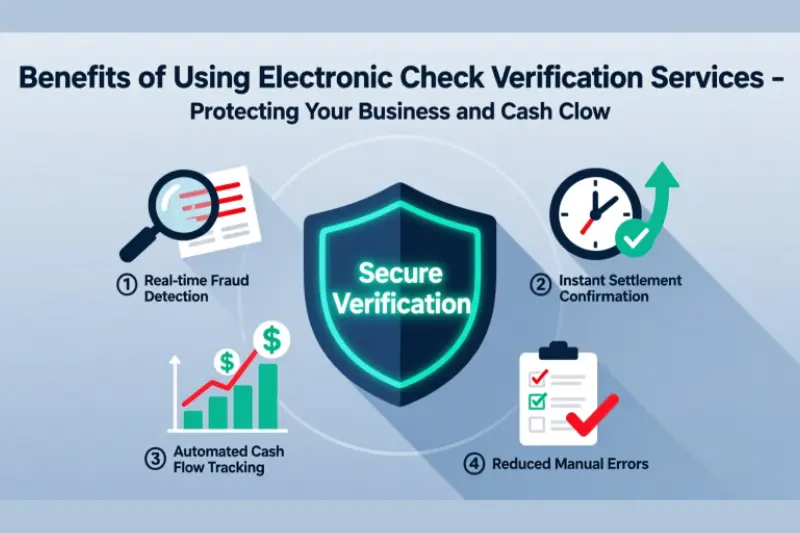
If you’re handling checks regularly, the risks can add up quickly. Late payments, bounced checks, or outright fraud can disrupt your cash flow and cost both time and money. That’s why Electronic Check Verification Services are such a game-changer for businesses of all sizes.
Here are the main benefits that make these services indispensable:
- Instant Fraud Prevention
One of the biggest advantages is that you can identify suspicious or risky checks immediately. Instead of discovering a problem days later, you catch it before it affects your finances. This proactive approach protects your bottom line. - Improved Cash Flow
By verifying checks before accepting them, you ensure that incoming funds are reliable. This reduces uncertainty and helps you plan expenses, payroll, and purchases more confidently. - Reduced Administrative Burden
Chasing bounced checks or following up with banks takes valuable time. Electronic verification automates much of this process, freeing you and your team to focus on core business tasks. - Enhanced Customer Confidence
Customers notice when a business has secure, reliable payment processes. Using verification services demonstrates professionalism, which builds trust and encourages repeat business. - Scalability for Growing Businesses
Whether you’re a small boutique or a rapidly expanding enterprise, these services scale with your needs. You don’t have to worry about manual verification slowing down operations as your check volume grows.
A small example from real life: a mid-sized service company used to lose several hundred dollars each month to bounced checks from first-time clients. After implementing an electronic verification service, they drastically reduced losses and even improved client relationships because the verification process was smooth and professional – nobody had to deal with awkward follow-ups or rejected checks.
In short, Electronic Check Verification Services aren’t just a safety net; they actively streamline operations, protect revenue, and build trust – all of which are crucial for long-term business success.
May be you like it:
Technology for Blind People – Education to Daily Life
Tech News Top App – Stay Updated with Latest Tech Trends
Future Tech Solutions – Shaping the Digital Era
Potential Drawbacks and Limitations – Understanding the Risks and Costs
While Electronic Check Verification Services offer significant advantages, it’s important to understand that no solution is perfect. Being aware of the potential drawbacks helps businesses make informed decisions and implement the service effectively.
- Cost Considerations
Most verification services charge either per check or via a monthly subscription. For small businesses with low check volumes, these costs might feel noticeable. However, it’s worth weighing the expense against the potential losses from bounced checks or fraud – in many cases, the service pays for itself. - False Positives
While verification systems are highly accurate, they aren’t flawless. Occasionally, a legitimate check may be flagged as high-risk. This can lead to unnecessary follow-ups or slight delays in processing payments, which may frustrate clients if not communicated carefully. - Limited Coverage for Certain Accounts
Some smaller banks or credit unions may not be fully integrated with verification services, which can result in incomplete checks. In these cases, manual verification or additional follow-up may still be required. - Privacy and Data Concerns
Because these services access sensitive financial information, ensuring the provider complies with banking and data privacy regulations is critical. Using an unverified or non-compliant service could create legal or reputational risks. - Dependence on Technology
Electronic verification relies on digital infrastructure. System outages, technical glitches, or internet issues could temporarily prevent checks from being verified, potentially delaying payments.
A practical insight: one small business owner noticed that a client’s check was flagged as high-risk due to a temporary account issue. By combining the verification service with a quick follow-up call, the issue was resolved smoothly – highlighting that while technology is powerful, a human touch is sometimes necessary.
In summary, while Electronic Check Verification Services drastically reduce fraud risk and improve efficiency, understanding their costs, limitations, and occasional quirks ensures businesses use them wisely and avoid unexpected challenges.
Real-World Applications – Who Can Benefit and How to Use Them Effectively
Understanding the practical side of Electronic Check Verification Services makes it clear why they’re becoming a standard tool for businesses across industries. These services aren’t just for large corporations – any organization that accepts checks can benefit from faster, safer, and more reliable payment processing.
- Small and Medium Businesses
For small shops, boutiques, or local service providers, a single bounced check can create financial stress. Verification services ensure that even first-time clients are providing valid payments, protecting cash flow without adding extra work for business owners. - Service-Based Industries
Consultants, contractors, and repair services often accept checks for one-off projects. A verification service acts as a safety net, letting them accept payments confidently without the risk of chasing a bounced check later. - Subscription or Membership-Based Businesses
Gyms, clubs, or subscription services that rely on recurring check payments can reduce administrative headaches. By verifying each payment upfront, they avoid disruptions in service and maintain steady revenue. - Property Management and Real Estate
Landlords and property managers frequently handle rent checks. Using electronic verification helps ensure timely rent collection, reduces disputes, and simplifies record-keeping. - E-Commerce and Remote Transactions
Even businesses that primarily operate online sometimes accept checks. Verification services provide peace of mind by confirming payment legitimacy, which is especially useful when dealing with remote clients or large orders.
A simple example: a landscaping company started using an electronic check verification service after a client’s check bounced for the first time in years. Within weeks, the service flagged another potential issue before the payment was deposited. The business owner avoided what could have been a costly delay in project funding and maintained a positive relationship with the client by handling the situation proactively.
In practice, Electronic Check Verification Services work best when integrated into your existing payment workflow. Training staff to understand the results and follow up appropriately ensures you gain maximum benefit – reducing risk while keeping customer experience smooth and professional.
Comparing Verification Options – Electronic Check Verification vs Manual Checks vs Third-Party Services
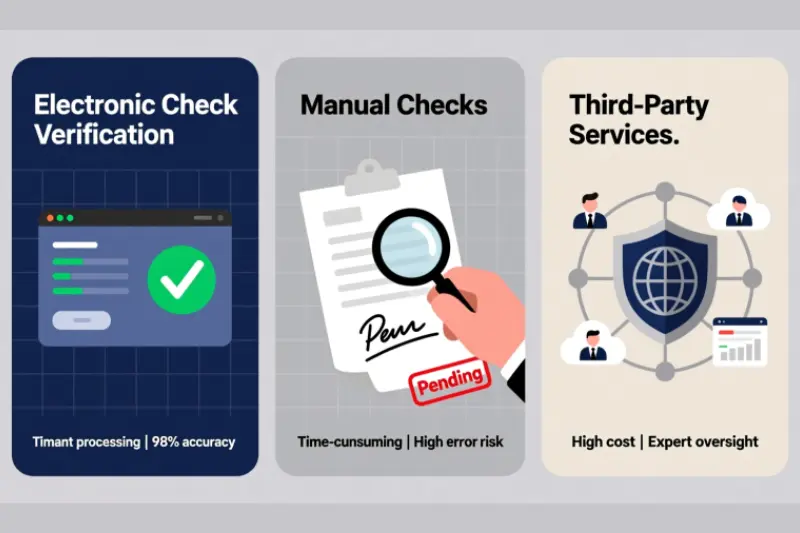
When it comes to protecting your business from bounced or fraudulent checks, you have several options. Understanding the differences can help you choose the right approach. Electronic Check Verification Services stand out, but let’s compare them with traditional methods to see why.
| Verification Method | Speed | Accuracy | Cost | Human Effort | Risk Reduction |
|---|---|---|---|---|---|
| Electronic Check Verification Services | Seconds | High | Moderate | Low | High |
| Manual Bank Verification | 1–3 days | Medium | Low | High | Medium |
| Third-Party Clearing Services | Hours–1 day | Medium–High | Variable | Medium | Medium–High |
- Manual Checks
Traditionally, businesses would verify checks by calling banks or waiting for the check to clear. While this can work for low-volume businesses, it’s slow and labor-intensive. Mistakes can happen, and you might only discover a problem days later, which could disrupt cash flow. - Third-Party Clearing Services
Some businesses use third-party services that process and clear checks. These can reduce some risk and administrative work, but they often come with delays and extra fees. They don’t always provide real-time risk analysis, meaning you might still encounter bounced checks. - Electronic Check Verification Services
These services are designed for speed and accuracy. They verify accounts in real-time, flag suspicious activity, and often integrate directly with accounting or payment platforms. While there’s a small cost per verification or monthly subscription, the time saved and potential losses prevented often outweigh the expense.
A practical scenario: a mid-sized consulting firm once relied solely on manual verification. After switching to electronic verification, they cut check-related issues by 80% and reduced the time spent following up with banks from hours per week to just a few minutes. The combination of speed, reliability, and automation made a significant difference in daily operations.
In short, while manual and third-party methods can work in some cases, Electronic Check Verification Services provide the most efficient, accurate, and scalable solution for businesses that want to minimize risk without adding unnecessary effort.
May be you like it:
Which B.Tech Course is Best for Future – Career Guide
MPA Nashik e Learning – Online Police Training Platform
SBI e Learning – Online Training & Employee Courses
Choosing the Right Electronic Check Verification Service – Key Factors to Consider
Selecting the right Electronic Check Verification Service can feel overwhelming with so many options on the market. But focusing on a few key factors can make the decision straightforward and ensure you get the most value for your business.
- Speed and Real-Time Verification
The primary reason to use electronic verification is speed. Look for services that provide results in seconds, not hours. Instant verification allows you to accept or decline checks confidently without delaying transactions. - Accuracy and Reliability
Accuracy is crucial. A system that generates frequent false positives can frustrate legitimate clients, while one that misses risks exposes your business to potential losses. Check for services with strong reviews, proven track records, and robust fraud detection algorithms. - Integration with Your Workflow
Modern businesses benefit most from services that integrate seamlessly with accounting software, payment platforms, or point-of-sale systems. Smooth integration reduces manual work, avoids errors, and ensures your staff can adopt the service quickly. - Compliance and Security
Financial data is sensitive. Choose a service that complies with banking regulations and data privacy laws. This protects your business from legal issues and ensures customer information is handled securely. - Cost and Pricing Structure
Pricing models vary – some charge per verification, while others offer monthly subscriptions. Consider your check volume and budget. Often, the small investment is worth the peace of mind and time saved. - Customer Support and Resources
Even the best service can run into occasional issues. Reliable customer support ensures any problems are resolved quickly. Some providers also offer tutorials, dashboards, and reports to help you monitor and optimize your verification process.
For example, a regional service company compared three verification providers before choosing one that integrated directly with their accounting software, offered real-time fraud alerts, and provided a transparent pricing structure. The result was fewer bounced checks and a smoother workflow, proving that careful selection pays off.
In conclusion, choosing the right Electronic Check Verification Service isn’t just about features – it’s about matching speed, reliability, integration, and support to your business needs. When done correctly, it maximizes security and efficiency while minimizing risk and administrative headaches.
Step-by-Step Guide to Implementing Verification Services in Your Business
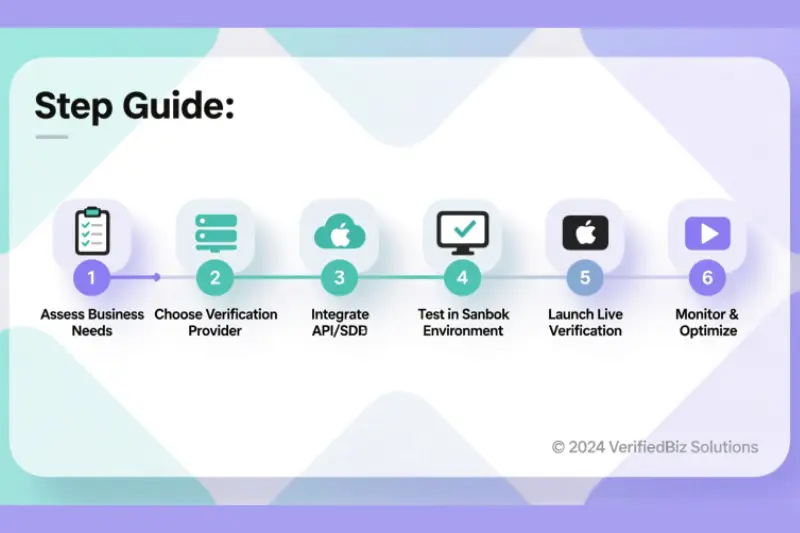
Integrating Electronic Check Verification Services into your business doesn’t have to be complicated. With a clear plan, you can protect your cash flow, reduce fraud, and streamline operations. Here’s a practical, step-by-step approach to get started:
- Assess Your Needs
Start by evaluating how often you receive checks, the typical check amounts, and any past issues with bounced or fraudulent payments. Understanding your volume and risk profile helps you choose a service that fits your business size and workflow. - Research and Select a Service
Look for providers that offer real-time verification, strong fraud detection, and seamless integration with your accounting or payment systems. Read reviews, compare pricing, and consider any additional features like reporting dashboards or customer support. - Integrate with Your Workflow
Set up the service with your existing payment platforms or accounting software. Many modern services provide plugins or APIs that make integration straightforward. Make sure your staff knows how to use the system for smooth adoption. - Train Your Team
Educate your employees on how to interpret verification results and handle flagged checks. This ensures consistency and helps maintain a professional approach when following up with clients, minimizing friction in transactions. - Test the System
Before going fully live, run a few test transactions. Verify how quickly results come through, whether the risk scoring aligns with expectations, and how the system interacts with your existing processes. - Monitor and Adjust
Once the system is live, regularly review verification reports and metrics. This helps identify trends, such as repeated issues with certain accounts, and allows you to adjust policies or thresholds as needed. - Communicate with Clients
If a check is flagged or verification fails, handle it politely and professionally. Clear communication maintains trust and ensures that clients understand the process is for security – not mistrust.
A real-world insight: a small consulting firm implemented an electronic verification service and initially flagged a few legitimate checks. After a short adjustment period and staff training, they were able to quickly resolve flagged issues without upsetting clients. The service soon became a seamless part of their payment workflow, preventing potential losses while improving efficiency.
In short, following a structured approach ensures that Electronic Check Verification Services are implemented effectively, adding real value to your business without disrupting operations.
Frequently Asked Questions (FAQs)
What exactly are Electronic Check Verification Services?
They are systems that verify the validity of a bank account and check funds before a payment is processed. This helps prevent fraud, bounced checks, and financial losses.
How fast does verification occur?
Most modern services provide results in seconds. This allows businesses to make quick decisions without delaying transactions for customers.
Can small businesses benefit from these services?
Absolutely. Even businesses with low check volumes can save time and money by avoiding bounced checks and reducing manual verification work.
Are these services 100% foolproof?
No system is perfect, but electronic verification dramatically reduces the risk of fraud. Occasional false positives may occur, but they are usually easy to resolve with a follow-up.
How much do these services cost?
Pricing varies – some charge per verification, while others offer monthly subscriptions. For most businesses, the cost is outweighed by the time saved and losses prevented.
Is customer financial information secure?
Reputable providers comply with banking regulations and data privacy standards, ensuring sensitive information is handled safely and confidentially.
Conclusion
In today’s fast-paced business world, relying solely on traditional check processing methods can leave you vulnerable to fraud, bounced payments, and unnecessary administrative headaches. Electronic Check Verification Services provide a modern solution that combines speed, accuracy, and intelligent risk assessment to protect your business.
The real value lies in how these services streamline operations. By verifying accounts in real-time, flagging suspicious activity, and reducing manual effort, they free up time for you and your team to focus on core business priorities. Beyond just preventing losses, they help maintain smooth cash flow, improve customer trust, and support scalable growth – benefits that impact your bottom line in meaningful ways.
It’s important to remember that no system is flawless. Occasionally, legitimate checks may be flagged, and costs may vary depending on volume and service provider. However, the peace of mind, efficiency, and protection these services provide far outweigh these minor limitations.
May be you like it:
Digital Marketing Internship – Kickstart Your Career
Best Digital Marketing Agency – Grow Your Business Fast
