

Introduction
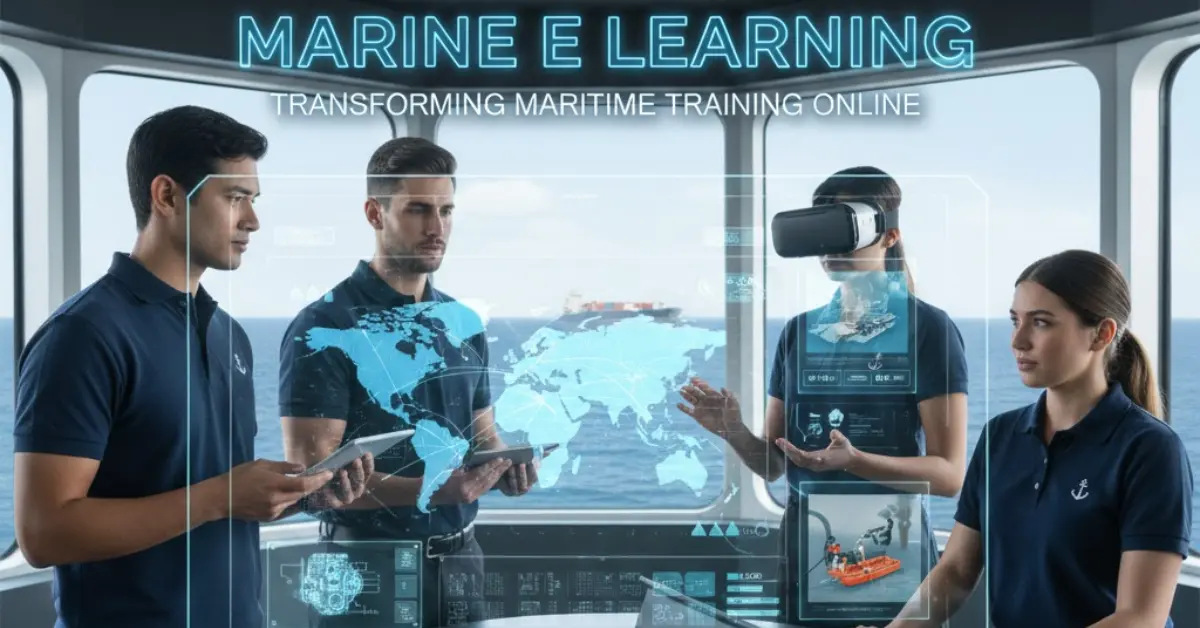
For generations, seafarers learned their craft in traditional classrooms – notebooks filled with navigation charts, instructors using physical models of ships, and long days away from the water. But the tides of learning are changing. Marine E Learning has taken that experience and brought it online, reshaping how maritime professionals train, grow, and stay certified.
Today’s mariners don’t have to wait for port time or travel halfway across the world for refresher courses. With a stable connection and a few clicks, they can access the same safety modules, simulator-based exercises, and compliance lessons from anywhere – even mid-voyage.
This shift isn’t just about convenience; it’s about creating smarter, safer crews. Digital learning gives seafarers access to consistent global standards, immediate updates on maritime regulations, and interactive tools that mimic real-life challenges. It’s hands-on experience – minus the travel costs and rigid schedules.
In an industry where time, safety, and precision define success, Marine E Learning is becoming the bridge between traditional expertise and the digital future of the sea.
Table of Contents
What Is Marine E Learning?

At its core, Marine E Learning is the digital evolution of maritime education. Instead of sitting in a classroom at a port academy, seafarers can now log in to online platforms that deliver the same – and often richer – training experiences through a screen.
It covers almost everything a modern mariner needs: safety drills, navigation systems, environmental compliance, cargo handling, and even leadership training. Courses can be interactive, with videos, quizzes, and virtual simulations that mimic real-life challenges at sea.
Imagine practicing an engine-room emergency scenario through a 3D simulation or refreshing your knowledge of global safety codes while onshore between contracts. That’s what marine e learning makes possible – learning that fits around real working lives, not the other way around.
The best part? These digital systems are designed by maritime professionals and approved by international bodies, ensuring that what you learn online matches the same standards used on ships and in academies worldwide. It’s modern education with the same integrity and discipline the maritime world has always valued – only now, it travels with you.
May be you like it:
Technology for Blind People – Education to Daily Life
Tech News Top App – Stay Updated with Latest Tech Trends
Future Tech Solutions – Shaping the Digital Era
Why the Maritime Industry Needed E Learning
For decades, seafarers faced a tough reality – professional growth often meant leaving home, traveling miles to training centers, and spending days or weeks ashore. Traditional maritime courses were effective but not always practical. A deck officer stationed halfway across the world couldn’t easily attend a class scheduled at a port academy. That distance created a serious barrier to continuous learning.
Then came another challenge: cost. Travel expenses, accommodation, and course fees added up quickly, especially for smaller shipping companies or independent crew members. Many postponed essential refresher training simply because it wasn’t financially or logistically feasible.
The industry also struggled with standardization. Training quality and course materials often varied from one region to another. What counted as a safety standard in Europe might look different in Asia, leaving mariners confused or unprepared for international compliance audits.
That’s where Marine E Learning filled the gap. It offered a way to deliver consistent, globally recognized training online – anytime, anywhere. Now, a seafarer in Karachi, Oslo, or Manila can learn from the same course materials, guided by certified maritime experts, without ever leaving port.
This digital approach doesn’t just save time and money – it keeps skills sharp and safety knowledge current, ensuring every ship runs with confident, well-trained crew members ready for any challenge.
How Marine E Learning Works
Think of Marine E Learning as a virtual bridge connecting seafarers to maritime academies and experts around the world – without ever stepping off the ship or leaving home. It’s built on smart platforms designed specifically for the challenges of life at sea.
Once a learner logs in, they get access to a personalized dashboard filled with interactive lessons, real-time progress tracking, and multimedia content. Courses usually include a mix of videos, animations, and simulations that replicate real maritime scenarios – like fire drills, navigation exercises, or machinery maintenance. These aren’t just click-through slides; they’re immersive experiences that help learners understand what to do, not just what to memorize.
Assessments are another key part. Short quizzes and practical assignments test both knowledge and decision-making skills. Many platforms now use AI-based feedback systems that analyze responses and suggest areas for improvement, making learning more adaptive and personal.
When a course or module is completed, the system automatically generates a digital certificate – often approved by international maritime authorities or organizations like IMO or STCW. These certifications can be shared directly with employers, helping seafarers stay compliant and career-ready.
The beauty of this setup is flexibility. Whether you’re a deck officer brushing up on safety procedures or an engineer learning about new propulsion systems, marine e learning fits into your schedule – not the other way around. It’s practical education designed for a world that never stops moving.
Key Benefits of Marine E Learning
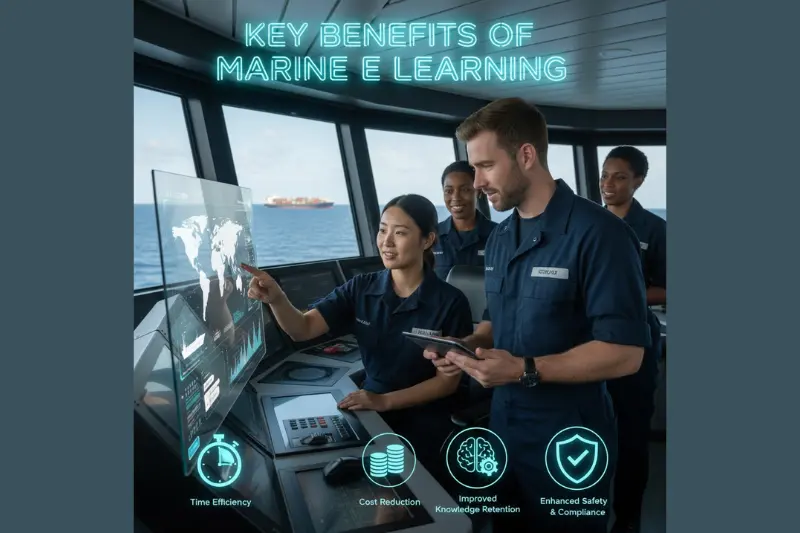
When you talk to seasoned mariners about training, one thing becomes clear – time and accessibility matter just as much as quality. That’s where Marine E Learning really shines. It brings education to the learner instead of forcing the learner to chase it.
Accessibility from anywhere. Whether you’re docked in Singapore or aboard a vessel in the Atlantic, e learning platforms give seafarers access to lessons 24/7. All you need is a stable internet connection, and you’re back in class – without leaving the ship.
Cost savings. Traditional training often means travel, accommodation, and weeks away from work. By going digital, crew members and companies save thousands in logistical costs while keeping everyone up to date on the latest regulations and technologies.
Flexible scheduling. Not everyone can sit through a 3-hour lecture during a busy voyage. With marine e learning, lessons can be paused, resumed, and completed at your own pace. It fits around shift schedules and port calls, not against them.
Always up to date. Maritime rules, safety standards, and equipment change faster than ever. Online learning allows course providers to update content instantly, so learners always receive the most current information – no outdated manuals or waiting for the next seminar.
Improved safety and performance. At its heart, this digital shift isn’t just about convenience. It’s about creating safer ships and more confident crews. Interactive modules, real-world scenarios, and instant feedback make it easier for mariners to retain information and apply it when it counts.
In short, Marine E Learning has become the maritime world’s answer to continuous improvement – flexible, affordable, and focused on what really matters: skill, safety, and readiness.
Real-World Applications in Maritime Training
What makes Marine E Learning so powerful isn’t just the technology – it’s how directly it connects to real life at sea. The best online platforms don’t teach theory in isolation; they replicate the very challenges mariners face on deck, in the engine room, and even in the boardroom.
Take safety drills, for example. Instead of relying solely on classroom demonstrations, crew members can now run through digital simulations of onboard emergencies – from engine fires to man-overboard scenarios. The system walks them step by step through procedures, helping them practice decision-making under pressure without putting anyone at risk.
Navigation training has also evolved. Interactive maps and radar simulators let deck officers test their skills on virtual routes under varying weather conditions. They can rehearse collision avoidance, port entries, or equipment handling – skills that can literally save lives when done right.
Then there’s environmental compliance. As global sustainability standards tighten, marine e learning platforms offer modules on pollution control, waste management, and fuel efficiency practices. It’s not just about following rules – it’s about understanding why these measures matter for the ocean and future generations.
Even ship management and leadership training have found their digital footing. Captains and officers can take online courses on crew communication, stress management, and cultural awareness – vital skills for managing diverse teams on long voyages.
Each of these applications proves one thing: Marine E Learning isn’t just digital theory. It’s hands-on, career-shaping education that keeps seafarers sharp, compliant, and confident no matter where the tides take them.
Technologies Powering Marine E Learning
Behind the smooth experience of Marine E Learning lies some seriously impressive technology. What once sounded futuristic – virtual reality lessons or AI-powered assessments – is now quietly shaping how maritime professionals learn, practice, and improve.
AR and VR simulations are the real game changers. Instead of just reading about emergency procedures or navigation routes, learners can experience them. Wearing a VR headset, a trainee can walk through an engine room, identify equipment, or practice responding to a simulated fire. It’s hands-on training, without the risk or cost of running a live drill. Augmented reality (AR), on the other hand, layers digital instructions over real-world visuals – helping engineers learn repairs or maintenance tasks more efficiently.
Then there’s gamification, a concept that turns lessons into challenges and rewards. Instead of slogging through long modules, learners complete levels, earn points, and unlock certifications. It’s fun, competitive, and – let’s be honest – a lot more engaging than a PDF manual.
AI-based assessments have also made training more intelligent. The system doesn’t just mark answers right or wrong; it studies patterns. If a trainee consistently struggles with navigation errors, the AI recommends additional practice in that specific area. That kind of personalization wasn’t possible in traditional classrooms.
And holding it all together are cloud-based learning platforms. These systems store progress, certificates, and resources securely online, allowing seafarers and employers to access training records anytime, anywhere. It’s learning that travels as freely as the crew themselves.
Together, these technologies make Marine E Learning more than just convenient – they make it measurable, immersive, and future-ready. The ocean may be unpredictable, but training no longer has to be.
May be you like it:
Which B.Tech Course is Best for Future – Career Guide
MPA Nashik e Learning – Online Police Training Platform
SBI e Learning – Online Training & Employee Courses
Challenges and Solutions in Digital Maritime Education
Of course, no transformation comes without a few rough waters. Marine E Learning has opened exciting new doors for maritime education, but it’s also faced its share of challenges. The good news? The industry is steadily solving them one by one.
Connectivity at sea is the biggest hurdle. While ships today are far better equipped than they were a decade ago, reliable internet access can still be patchy on long voyages. To tackle this, e learning providers now offer offline modules – allowing seafarers to download lessons, complete them without internet, and sync progress once they reconnect. It’s a small adjustment that makes a big difference.
Another challenge is user adoption. Not every mariner is instantly comfortable with digital tools. Some prefer the traditional classroom setting or hands-on instruction. The key here has been designing user-friendly interfaces and offering short “how-to” guides that make platforms intuitive – even for those who don’t consider themselves tech-savvy. Plus, interactive simulations and visual learning have made digital courses more engaging than static lectures ever were.
Then comes certification credibility. Early on, there was skepticism – could an online course really match the standards of an academy? Over time, however, international organizations like the IMO and STCW have started recognizing accredited digital training programs. Many Marine E Learning platforms now partner directly with maritime authorities to ensure their content meets global compliance standards.
Lastly, there’s the human factor – the fear that online learning feels isolated. Leading platforms now integrate discussion boards, mentorship sessions, and live webinars, giving learners direct contact with instructors and peers around the world.
In short, the challenges are real, but they’re being met with smart, practical solutions. The maritime world isn’t replacing tradition; it’s refining it – blending decades of seafaring wisdom with the reach and flexibility of digital learning.
The Future of Marine E Learning

If the last few years have shown anything, it’s that Marine E Learning isn’t a temporary fix – it’s the new foundation of maritime education. And as technology continues to evolve, so will the way seafarers learn, certify, and grow in their careers.
One of the clearest trends ahead is the rise of blended training models. While online platforms cover theory and simulation brilliantly, some hands-on skills still need physical practice. The future lies in hybrid setups – a mix of digital lessons, VR simulations, and short in-person assessments. This balance will give trainees the best of both worlds: flexible learning with real-world validation.
Another shift is toward personalized learning paths. Instead of forcing every learner through the same material, AI-driven systems will tailor courses based on skill level, role, and career goals. A cadet focusing on deck operations will see a different journey than a chief engineer working toward advanced certification. This customization keeps training relevant, efficient, and far more motivating.
We’re also seeing a push for global recognition of online credentials. As major organizations and maritime authorities embrace digital certification, online qualifications are gaining equal credibility with classroom-based ones. Soon, employers will treat an accredited e-learning certificate the same way they treat a port academy diploma – because both represent verified, standardized skill sets.
And let’s not forget innovation itself. With advancements in AI, data analytics, and VR, the line between “training” and “experience” will blur even more. Seafarers could soon train in fully immersive digital environments that mirror real-world operations, right down to ship-specific procedures and weather conditions.
The horizon looks promising – not just for learning, but for the entire maritime profession. Marine E Learning is setting the course toward a smarter, safer, and more inclusive future where education truly sails with the crew.
FAQs About Marine E Learning
What is Marine E Learning?
It’s online training for seafarers covering safety, navigation, and ship management through digital platforms.
Is Marine E Learning accredited?
Yes, most programs are approved by IMO or STCW-recognized bodies.
Why choose Marine E Learning?
It’s flexible, cost-effective, and keeps mariners updated with global standards.
What courses are offered?
Safety drills, navigation, environmental training, and compliance modules.
Can I learn with limited internet?
Yes, many platforms allow offline learning and progress syncing at sea.
Conclusion
At the end of the day, Marine E Learning isn’t just a new way to take courses – it’s a complete rethinking of how the maritime world grows, shares knowledge, and ensures safety at sea. It has taken something once limited by geography and turned it into a living, global classroom where every seafarer can keep learning, no matter where the waves carry them.
What makes this shift so meaningful isn’t the technology alone – it’s the opportunity it creates. It gives a young cadet in a coastal town the same access to world-class training as a senior officer in a major port. It keeps ships safer by ensuring crews stay updated with the latest standards. And it builds confidence – the kind that comes from knowing your skills are sharp and recognized anywhere in the world.
Maritime work has always been about resilience, discipline, and adaptability. Now, learning itself embodies those same traits. Marine E Learning has proven that progress doesn’t mean leaving tradition behind – it means carrying it forward in smarter, more accessible ways.
The ocean will always demand skill, courage, and teamwork. With digital learning leading the way, the next generation of mariners won’t just be prepared – they’ll be empowered.
May be you like it:
Digital Marketing Internship – Kickstart Your Career
Best Digital Marketing Agency – Grow Your Business Fast
